This post contains affiliate links. Please read our disclosure policy.
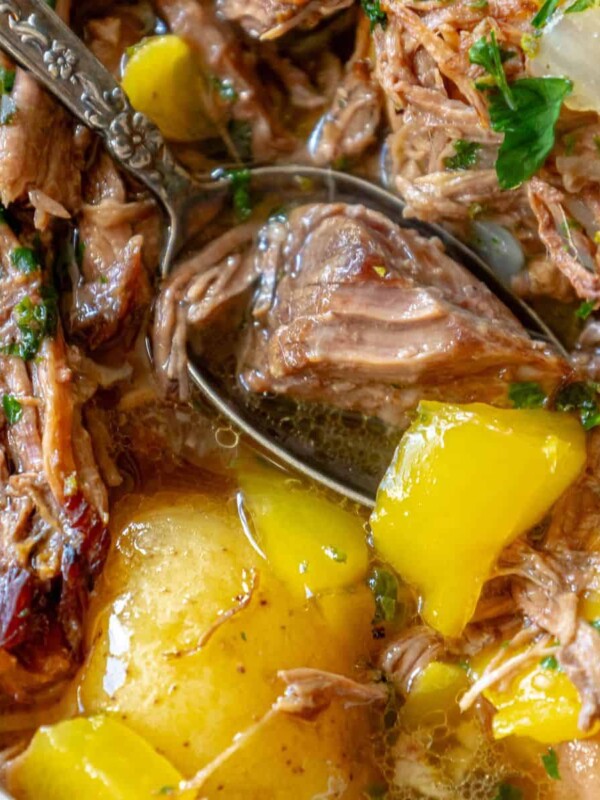
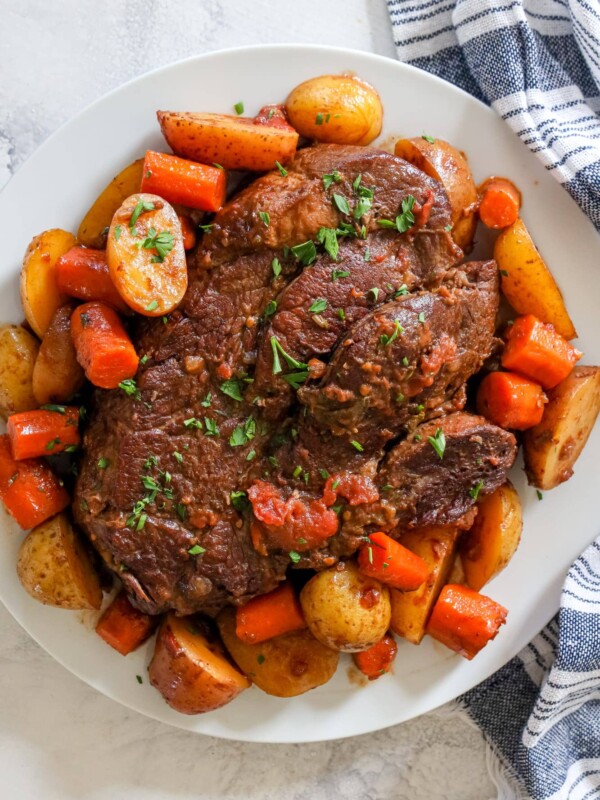
We love pot roast in my house, and we love tomato soup. There are two reliable meals that get my kids happy to come to the table – and this Tomato Soup Pot Roast recipe combines them both! I once wondered if I could use condensed tomato soup as a braising-liquid base for pot roast, and we were blown away by the results. Years later, we’re still making this pot roast on repeat – it is full of rich tomato flavor, and is one of the easiest dinners to make, ever!
I love to serve this pot roast over Salt Baked Sweet Potatoes, Cabbage and Noodles, or Crispy Roasted Potatoes!


Don’t want all the extras in a recipe post? We provide a skip to recipe button in the top left corner, as well as a clickable table of contents, just below, to help make this page easier to navigate.
At Sweet C’s, I add lots of tips in all of my recipes – because I am a home cook without any formal training, and I find I am more confident making dishes when I understand why it works, and what each ingredient means to the flavor of a recipe. My goal is for even the most beginner home cook to feel empowered in the kitchen.
Table of Contents
Why You’ll Love This Recipe
- A genuinely simple ingredient list that turns into a rich, deeply flavorful gravy
- Mostly hands-off – sear it, then let the oven (or slow cooker) do the work
- Endlessly adaptable – swap the roast, the soup flavor, or add potatoes right in the pot
- Tastes even better the next day, so it’s a great make-ahead dinner
Tomato Soup Pot Roast Ingredients
- 2 tablespoons olive oil – for searing the roast and building a caramelized flavor base
- 3-4 pound chuck roast – the hearty base of the dish; slow cooking breaks it down into tender, shreddable meat
- 24 oz cream of tomato soup – gives the sauce body, tangy sweetness, and a velvety texture
- 2 carrots, chopped – add earthy sweetness and soften into the sauce as they cook
- 1 onion, chopped – builds aromatic, savory depth
- 2-3 ribs celery, chopped – adds a fresh, slightly herbal note that balances the sweeter vegetables
- 4-6 cloves garlic – mellows into a warm, buttery flavor over the long cook
- Salt and pepper, to taste
Equipment Needed
- Large, heavy pot or Dutch oven
- Stand mixer with paddle attachment, or two forks, for shredding
- Ladle
Steps to Make Pot Roast in Tomato Soup
Once you’ve gathered your ingredients, we will use the following process:
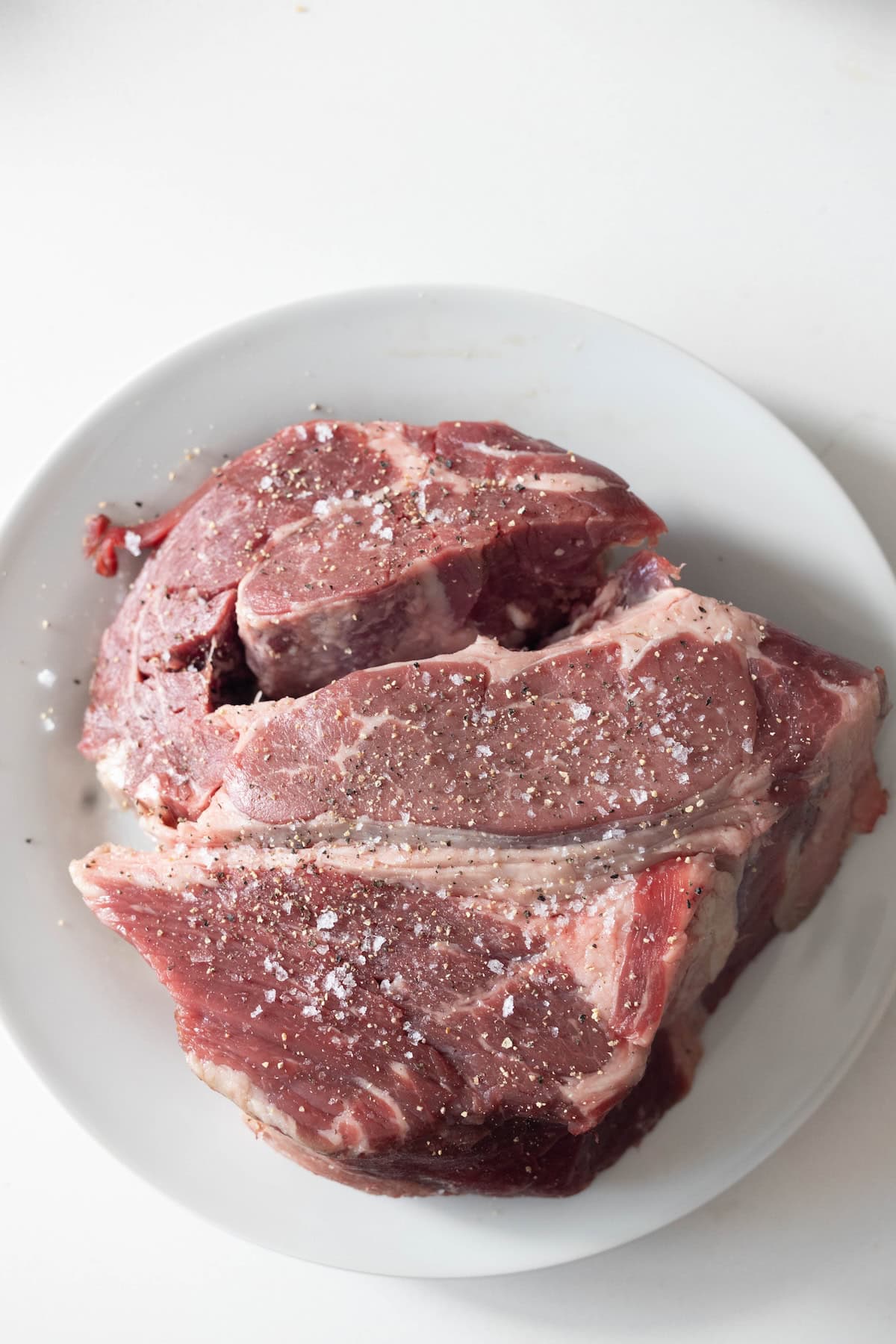
Season Roast
Bring roast to room temperature, season well with salt and pepper.
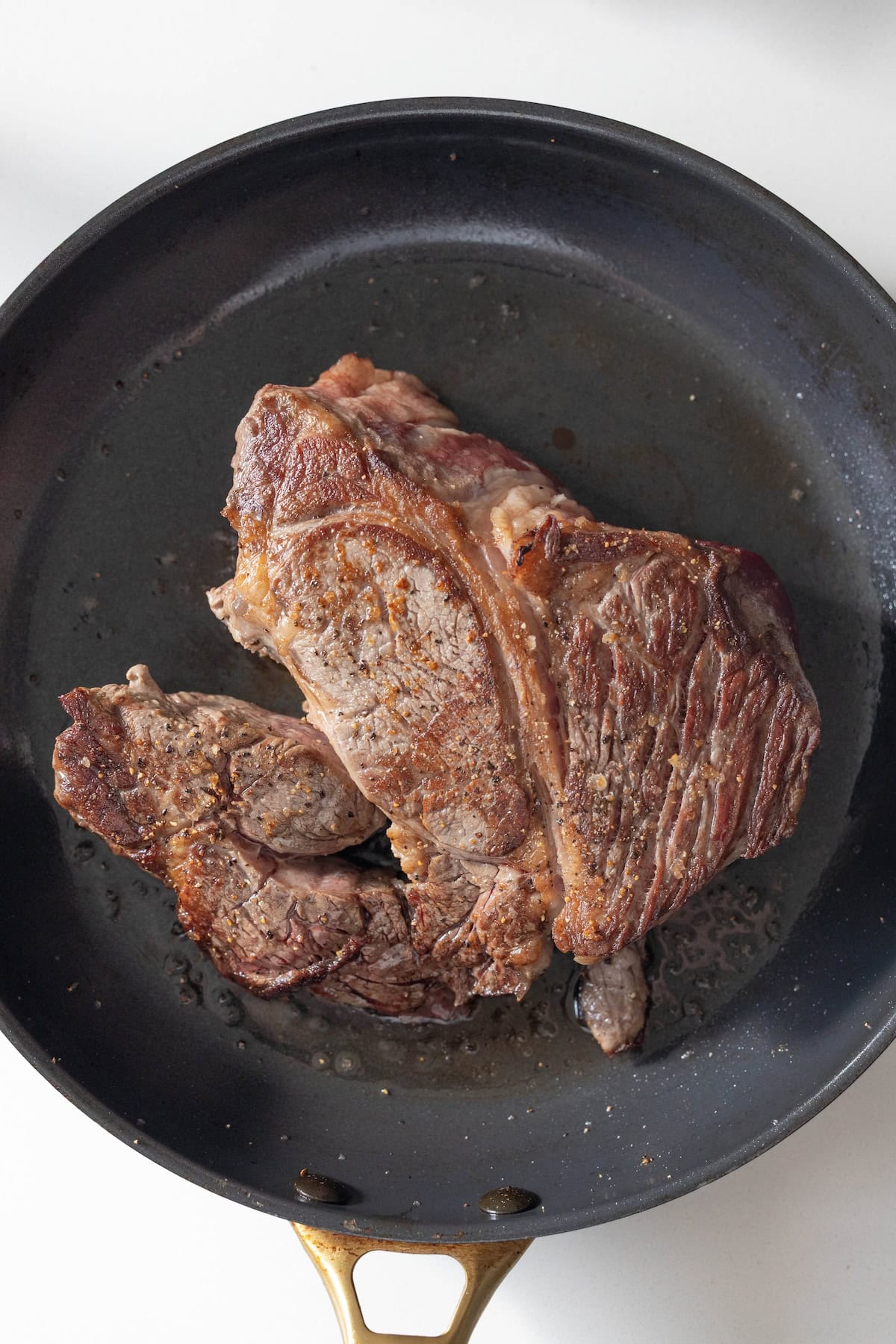
Sear Roast
In a large, heavy pan, heat olive oil to shimmery.
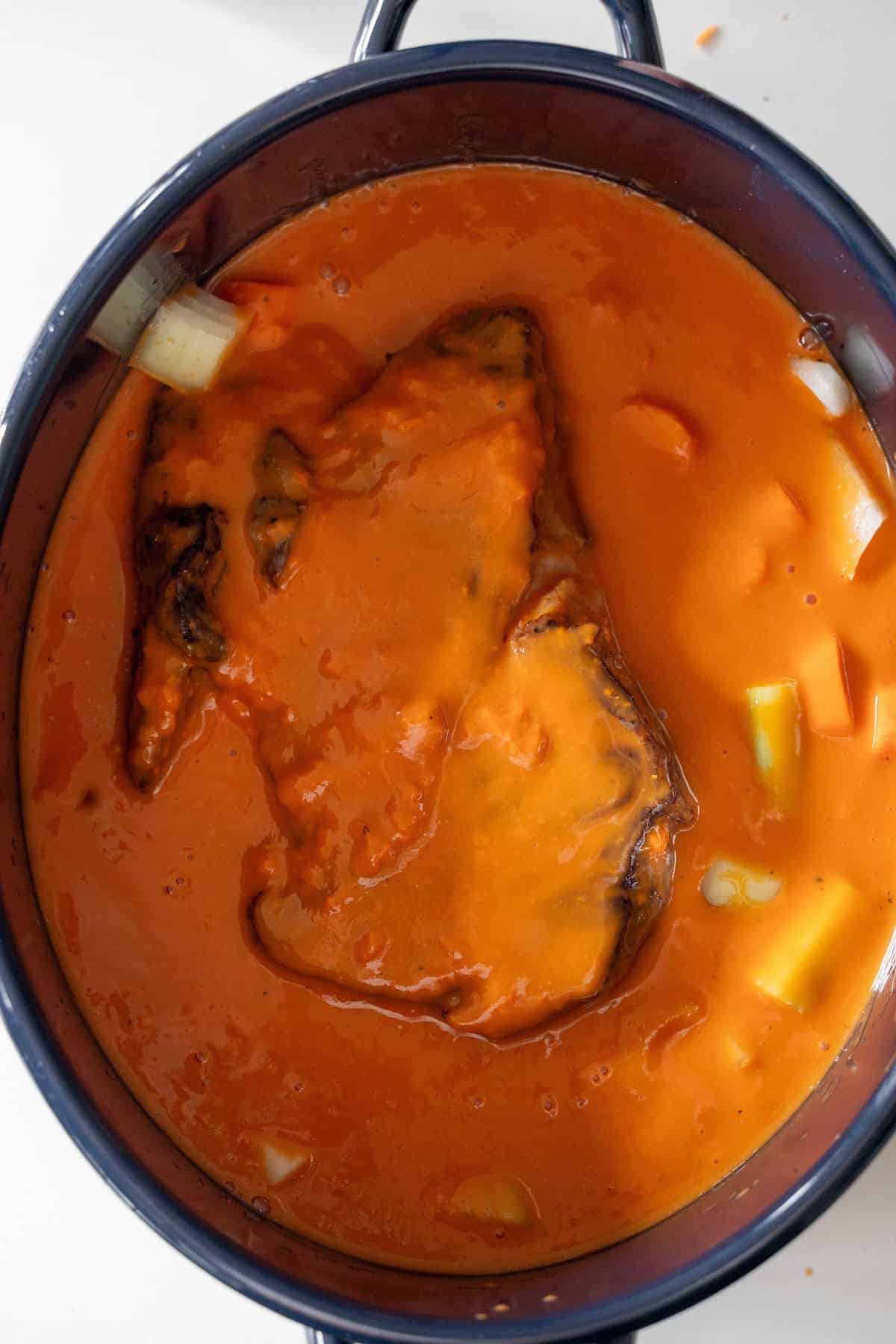
Roast
Bake in the oven, covered, until the roast is fork-tender- about 3 hours. If the liquid cooks down too much, stir in more 1/4 cup at a time.
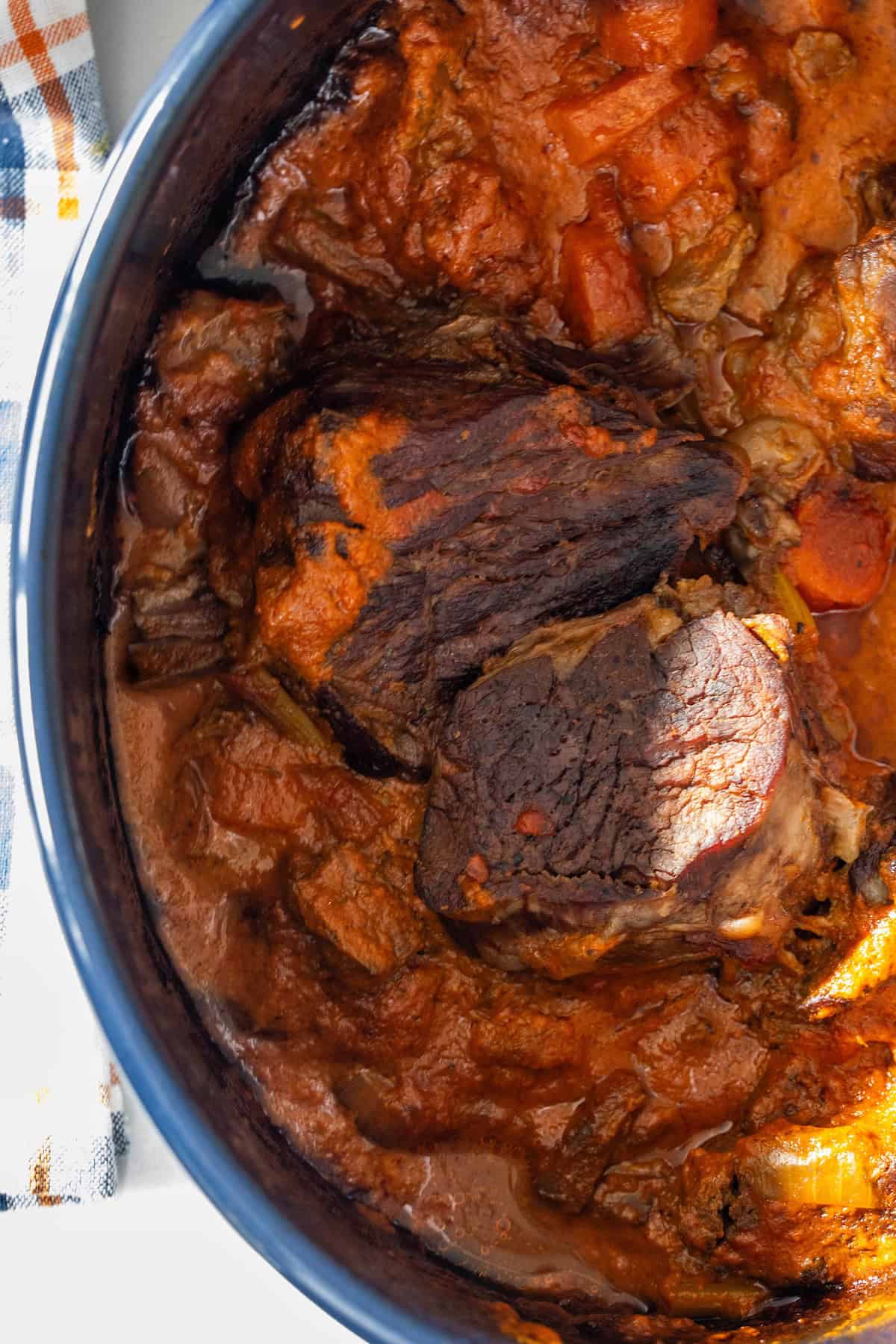
Shred Roast
Remove the roast from the pot and shred. I like to place it in a stand mixer with the paddle attachment, but you can also use two forks. While shredding, heat the sauce to thicken. I blend it for gravy, but you don’t need to.
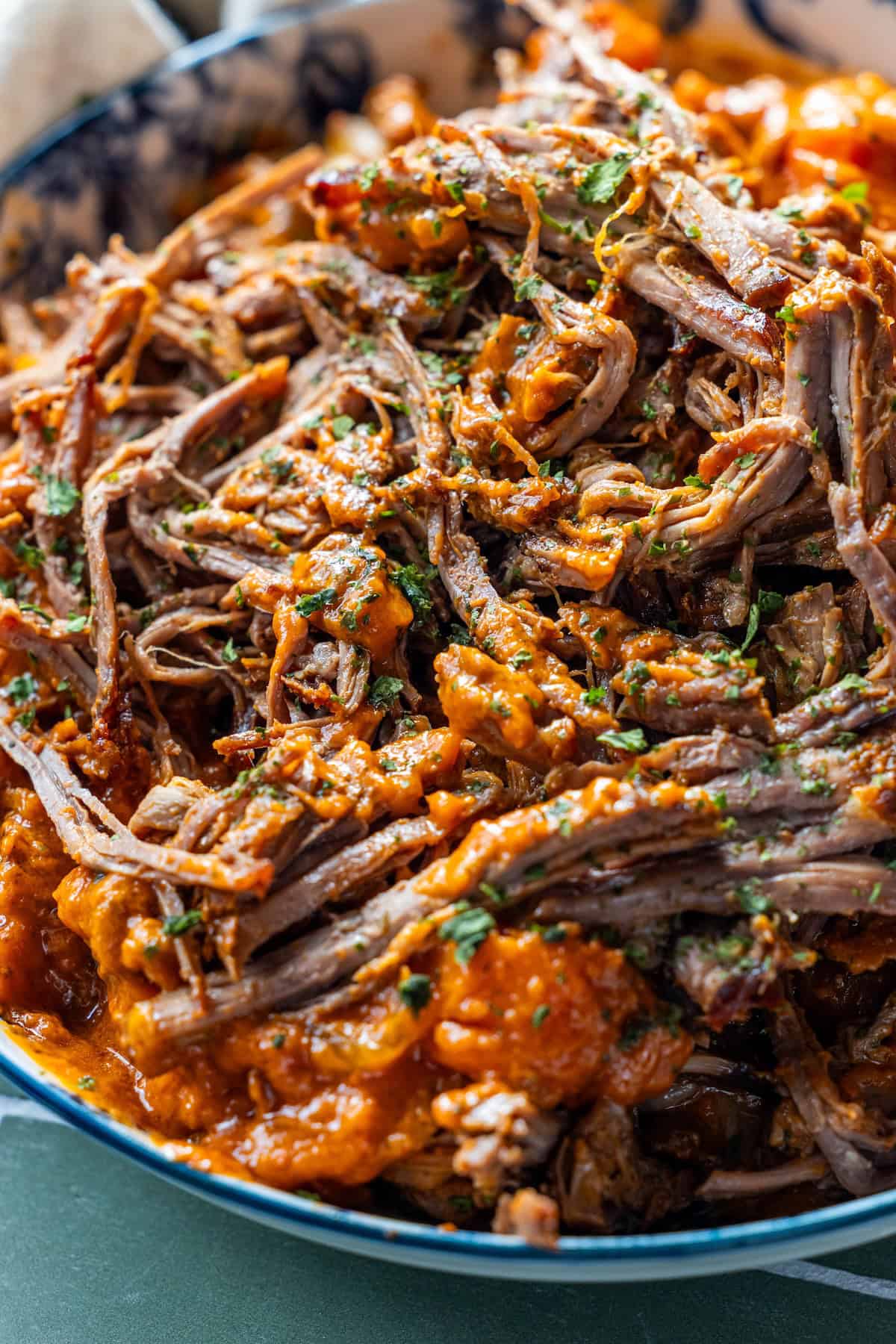
Serve & Enjoy!
Ladle sauce over shredded pot roast, toss, and serve!
Tips for the Best Tomato Soup Pot Roast
Don’t rush the sear – a deep golden crust on the roast makes a noticeably richer, more complex sauce.
A heavy Dutch oven holds heat evenly and creates the best braising environment for fall-apart tender beef.
Salt the roast before searing, then taste again after shredding to make sure the seasoning is balanced all the way through.
If you want a slightly sweeter or more herb-forward flavor, swap in tomato basil or roasted tomato soup in place of plain cream of tomato soup.
If the sauce is too thick, or you just want more gravy, splash in ½-1 cup of beef broth.
Chop the carrots, onion, and celery to similar sizes so they cook evenly and blend nicely into the sauce.
Judge doneness by tenderness, not the clock – the roast is ready when it shreds easily with a fork, and that can vary a bit depending on your specific cut.
If your roast is especially marbled, skim a little fat off the top of the pot before shredding to keep the sauce silky instead of greasy.
Shred the meat directly in the pot rather than on a separate cutting board – it soaks up more of the tomato gravy that way.
Storage & Make-Ahead
Store leftovers in an airtight container in the fridge for up to 4 days. Like most braises, the flavor actually improves overnight, which makes this a great make-ahead dinner or meal-prep option.
To reheat, warm gently on the stovetop or in the microwave, adding a splash of broth or water if the sauce has thickened up in the fridge.
Leftovers freeze well in an airtight container for up to 3 months. Thaw overnight in the refrigerator and reheat gently on the stovetop.
Variations to Try
- Slow Cooker Version – sear the roast first for the best flavor, then transfer everything to a slow cooker. Cook on low 8-10 hours or high 4-5 hours, until the roast shreds easily.
- Loaded Pot Roast – add large chunks of potato along with the other vegetables; they’ll soften right along with the roast.
- Spiced Up – stir in a little harissa or extra paprika for a deeper, slightly spicy flavor.
- Different Roast – chuck roast is ideal, but bottom round, shoulder roast, or brisket all work well; just cook until it’s fork-tender, which may take more or less time.
- Condensed Soup Swap – if you only have condensed tomato soup on hand, use it in place of the cream of tomato soup and add ½ cup of beef broth or water to make up the difference in liquid.
What to Serve with Tomato Soup Pot Roast
This pot roast is fantastic over mashed potatoes, egg noodles, or rice – anything that can soak up the tomato gravy. It’s also great alongside Easy Garlic Bread for scooping up extra sauce, a Pesto Caprese Salad or Olive Garden Copycat Salad for something fresh, or a Salt Baked Potato with Herbed Butter for a heartier dinner that even fills up my teen son.




Tomato Soup Pot Roast FAQs
Yes—sear the roast first for best flavor, then add everything to the slow cooker. Cook on low for 8–10 hours or high for 4–5 hours, until the roast easily shreds.
Chuck roast is ideal, but bottom round, shoulder roast, or brisket also work. Just make sure to cook until tender.
Technically no—but searing adds rich, caramelized flavor that makes a big difference in the final dish. It’s worth the extra few minutes.
Stir in a splash of beef broth, water, or even a little more tomato soup until it reaches your desired consistency.
Remove the lid and simmer for 10–15 minutes to reduce, or mash some of the cooked vegetables into the sauce to thicken naturally.
Yes—cut them into large chunks and add them with the other vegetables. They’ll soften as the roast cooks.
Absolutely. This pot roast reheats beautifully, and the flavors deepen overnight. Store covered in the fridge for up to 4 days.
Yes. Freeze in an airtight container for up to 3 months. Thaw overnight in the refrigerator and reheat gently on the stovetop.
Yes—just add ½ cup beef broth or water to replace the missing liquid so the sauce doesn’t get too thick.
Mashed potatoes, egg noodles, rice, or crusty bread all pair perfectly and soak up the tomato gravy.
If you love this easy recipe please click the stars below to give it a five star rating and leave a comment! Please also help me share on Instagram, Facebook, and Pinterest!
Share on Facebook
SharePin this now to find it later
Pin ItFollow on Instagram
Tomato Soup Pot Roast

Ingredients
- 2 tablespoons olive oil
- 3 4 pound chuck roast
- 24 oz cream of tomato soup
- 2 carrots, chopped
- 1 onion, chopped
- 2-3 ribs celery, chopped
- 4-6 cloves garlic
- Salt and pepper
Instructions
- Heat olive oil in a large pot or Dutch oven over medium-high heat.
- Season the chuck roast generously with salt and pepper, then sear on all sides until deeply browned.
- Add the cream of tomato soup, carrots, onion, celery, and garlic to the pot.
- Cover and cook—either on the stovetop at a low simmer or in a 300°F oven—until the roast is very tender and easily pulls apart (about 3–4 hours).
- Shred the meat directly in the pot, stirring it into the sauce and vegetables.
- Taste and adjust seasoning, then serve with plenty of the tomato gravy spooned over the top.
Notes
Nutrition
Nutrition information is automatically calculated, so should only be used as an approximation.