This post contains affiliate links. Please read our disclosure policy.
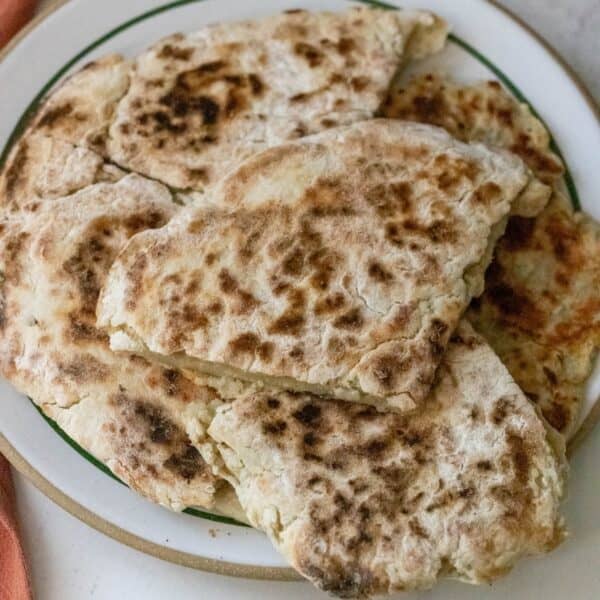
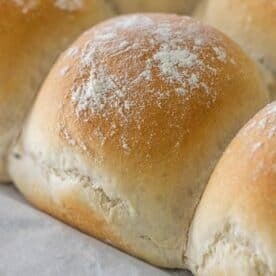
If you’ve ever had breakfast in Scotland, you know there’s nothing quite like a Scottish morning roll – soft, pillowy, dusted with flour, and just begging to be split open and stuffed with butter, bacon, or a square sausage. These soft floury baps are a Scottish breakfast institution, and once you make a batch at home, you’ll understand why folks line up at the bakery for them before the sun’s even up.
These rolls are an obsession of my husbands – he makes them a few times a month, and always preps them before he goes on trips to make himself breakfast sandwiches to eat on the way to the airport – it’s his little tradition to start a trip on a good foot, and my family looks forward to them anytime he’s going somewhere for work. These rolls are known by a dozen names depending on where you are in Scotland – baps, softies, Glasgow rolls, floury rolls – but they’re all the same gloriously soft, low, tender roll with that signature powdery top. Luke spent dozens of attempts to nail the perfect recipe – and is sharing his foolproof method with us!
The best part? They take just six simple ingredients and a little patience while the dough rises. No fancy equipment, no sourdough starter, no stand mixer required. If you can stir a bowl and shape a ball of dough, you can make bakery-style morning rolls.


Don’t want all the extras in a recipe post? We provide a skip to recipe button in the top left corner, as well as a clickable table of contents, just below, to help make this page easier to navigate.
At Sweet C’s, I add lots of tips in all of my recipes – because I am a home cook without any formal training, and I find I am more confident making dishes when I understand why it works, and what each ingredient means to the flavor of a recipe. My goal is for even the most beginner home cook to feel empowered in the kitchen.
Table of Contents
What Are Scottish Morning Rolls?
Morning rolls (often called baps in Scotland) are soft, wide, slightly flattened breakfast rolls with a tender crumb and a soft, flour-dusted crust – the opposite of a crusty, crackly artisan roll. They’re enriched with just a touch of fat, which keeps them pillowy rather than chewy, and they’re baked hot and fast so they stay soft instead of crisping up.
In Scotland you’ll find them under different names by region – softies in some areas, baps or floury rolls in others, Glasgow rolls in the west – but they’re all the same idea: a humble, fluffy roll built for breakfast. They’re the foundation of the legendary “roll and sausage” (a square Lorne sausage tucked into a warm roll), but they’re equally perfect with butter and jam, a fried egg, or a slab of good bacon.
The secret to getting them right is keeping the dough on the slack (slightly wet) side, giving them a proper rise, and baking them just until lightly golden – no more than 10 minutes – so they never lose that soft, squishable texture.
My Pro Tip
Best Made Fresh
Morning rolls are at their absolute best the day they’re baked — soft, fresh, and warm. Make them in the morning, or the night before and warm them briefly before serving.
How to Make Scottish Morning Rolls
Ingredients
This recipe makes 8 soft morning rolls. Here’s what you’ll need:
- Strong white bread flour (500g / about 4 cups): Bread flour with a higher protein content (12–14%) gives the rolls structure and a soft, springy crumb. All-purpose works in a pinch but the texture won’t be quite as tender-chewy.
- Instant yeast (7g / 2¼ tsp, one packet): The lift that makes them light and fluffy. Instant yeast can go straight into the flour; if using active dry, bloom it in the warm liquid first.
- Sugar (1 tsp): Just a little, to feed the yeast and lightly brown the tops.
- Salt (1½ tsp): For flavor — don’t skip it, or the rolls will taste flat.
- Butter or lard (25g / 2 tbsp): Traditional rolls use lard for that authentic bakery softness, but butter is delicious and easier to find. Rubbed into the flour, it keeps the crumb tender.
- Warm milk and water (about 300ml / 1¼ cups total): A mix of milk and water makes a soft, slightly enriched dough. Keep it lukewarm — warm enough to wake the yeast, never hot enough to kill it.
- Extra flour, for dusting: That signature floury top is non-negotiable.
Making Scottish Morning Rolls Step by Step
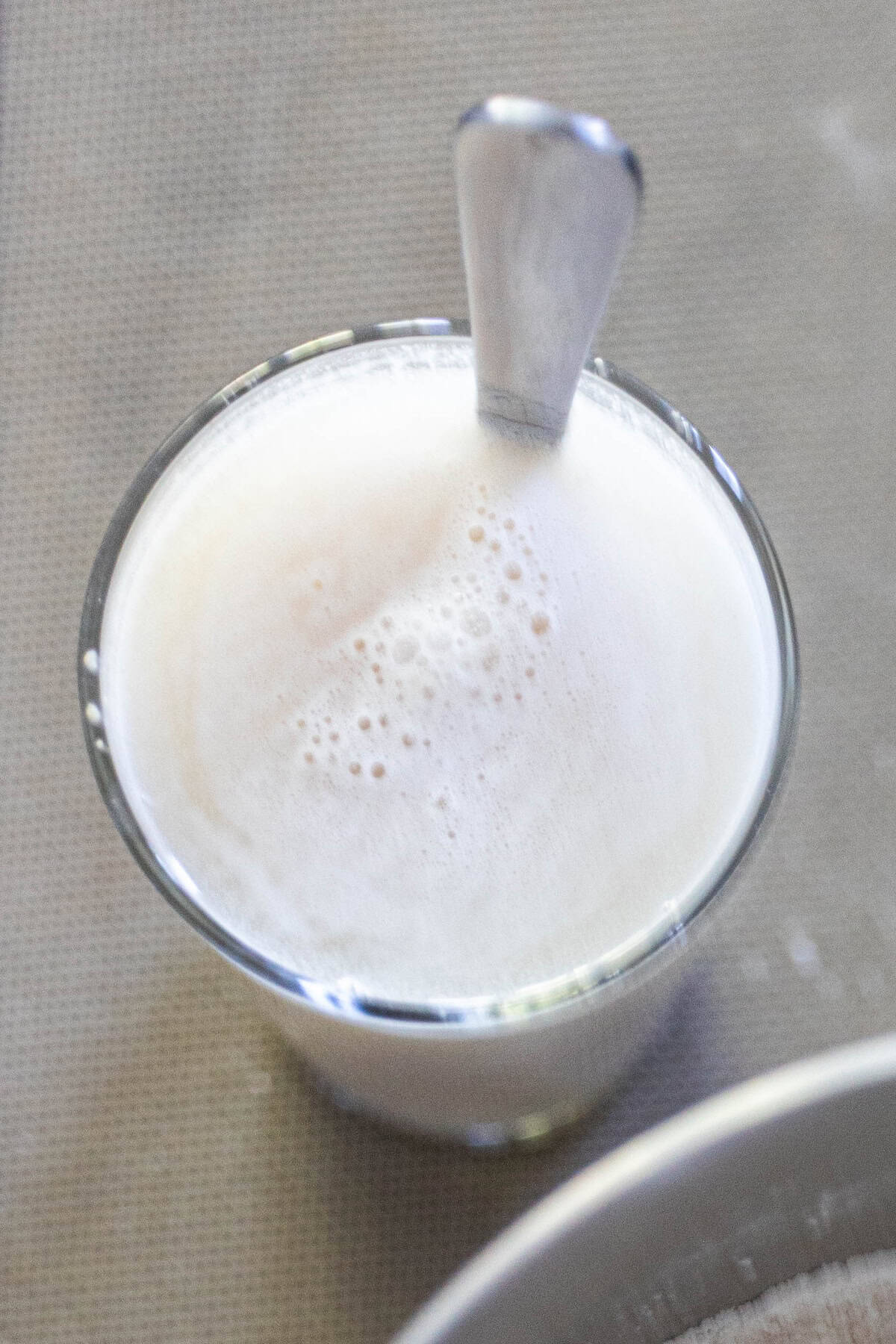
Proof Yeast
I always proof yeast in warm water for five minutes before baking – it is the easiest way to be sure your yeast is active and will work properly, so you can save your other ingredients! Proof yeast in the warm water.
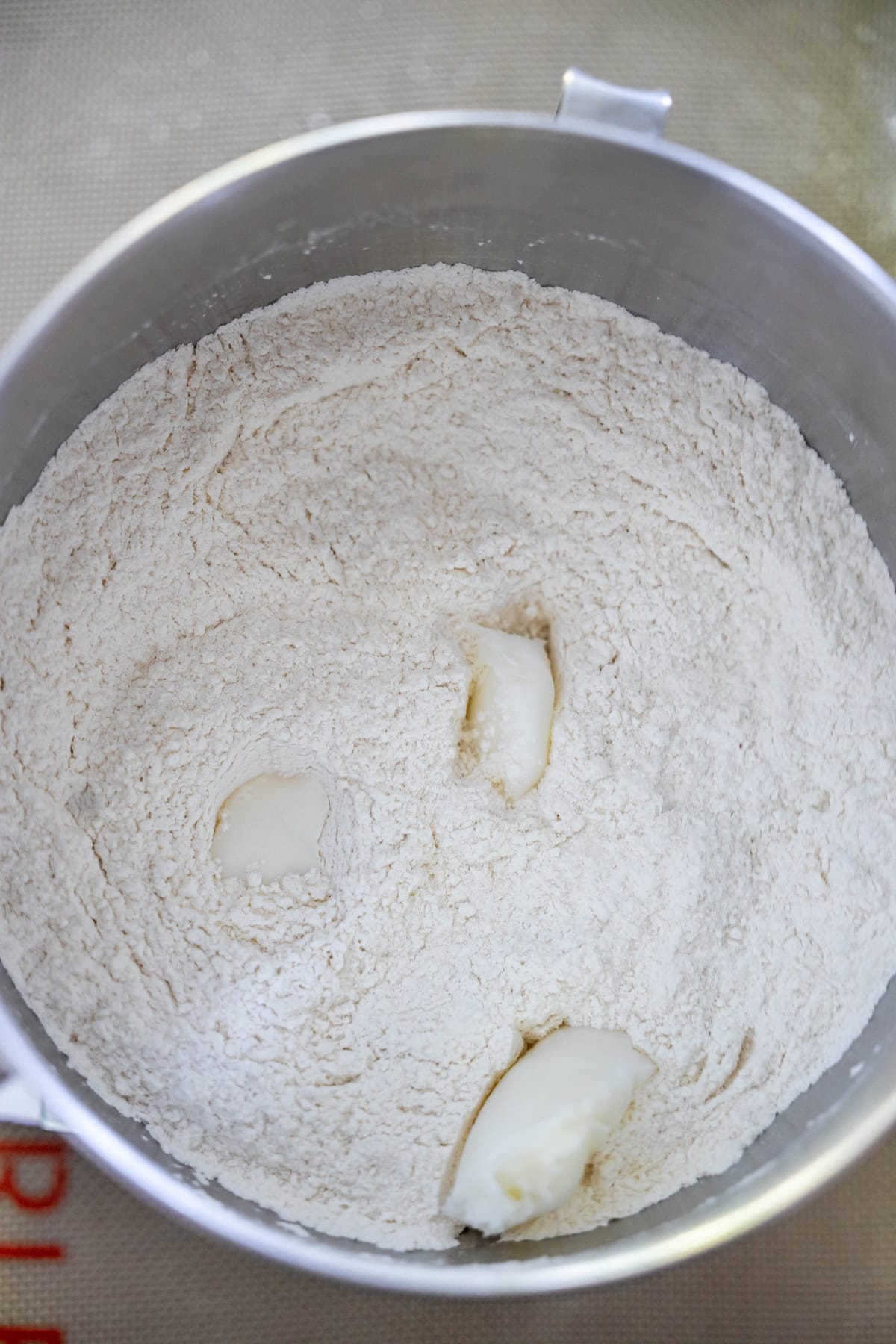
Make Dough
In a large bowl, whisk together the flour, proofed yeast, sugar, and salt. Rub in the butter (or lard) with your fingertips until the mixture looks like fine crumbs. Make a well in the center, pour in the warm milk, and stir until it comes together into a soft, slightly sticky dough.
Knead
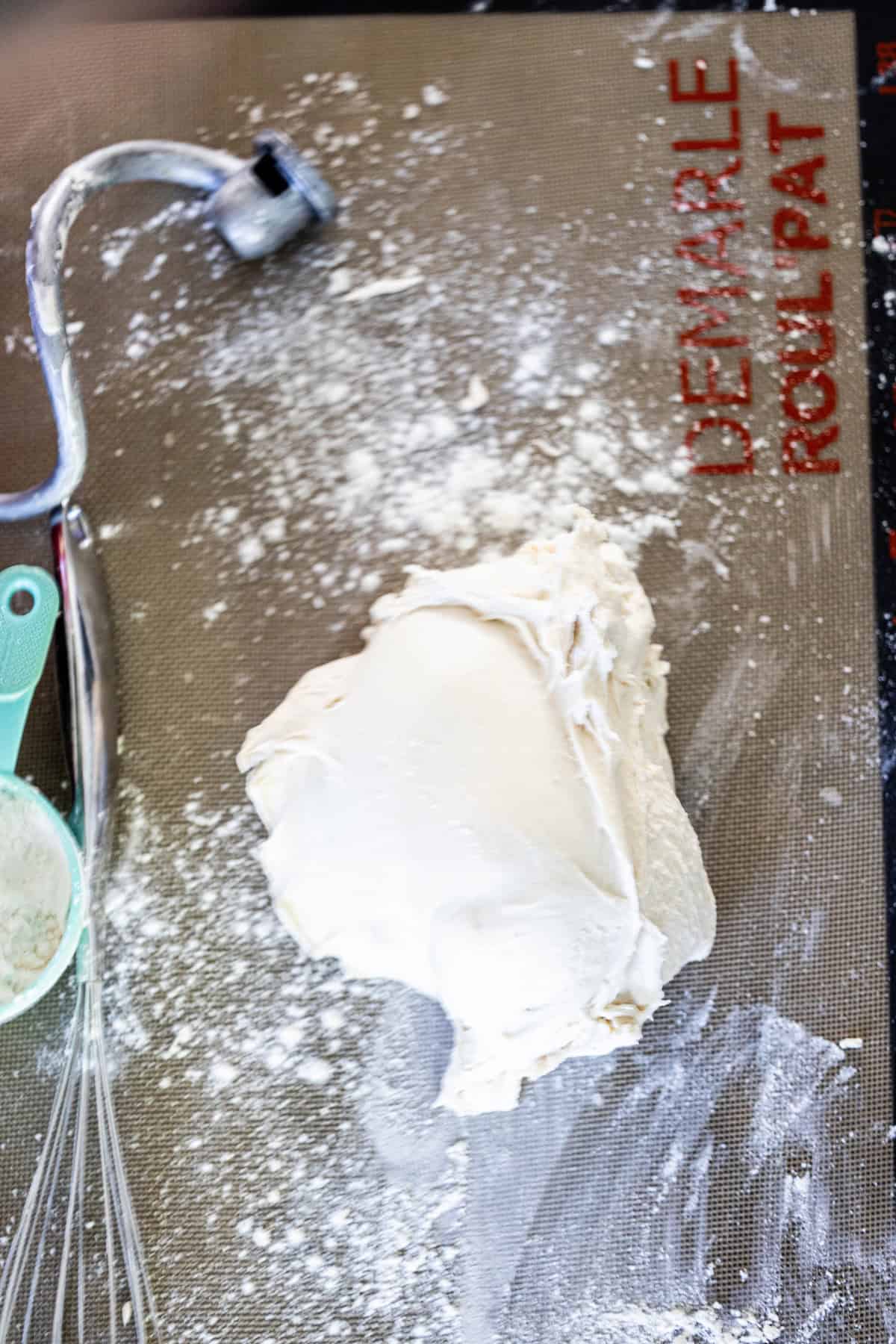
Turn the dough out onto a lightly floured surface and knead for 8-10 minutes, until smooth and elastic. It should stay soft and a touch tacky – resist the urge to add too much flour.
First Rise
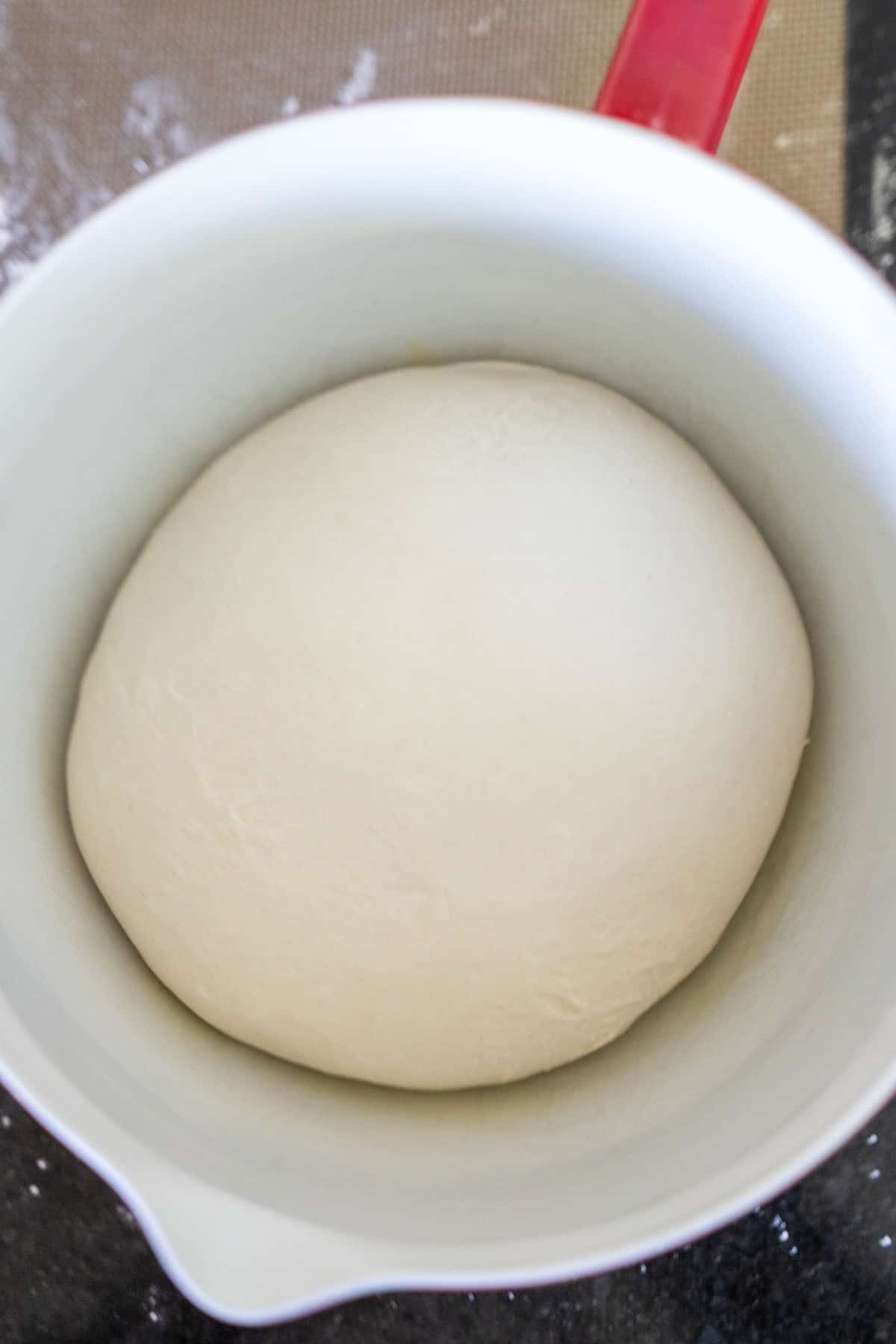
Place the dough in a lightly oiled bowl, cover, and let it rise somewhere warm for 1 to 2 hours, until doubled in size.
Divide Dough
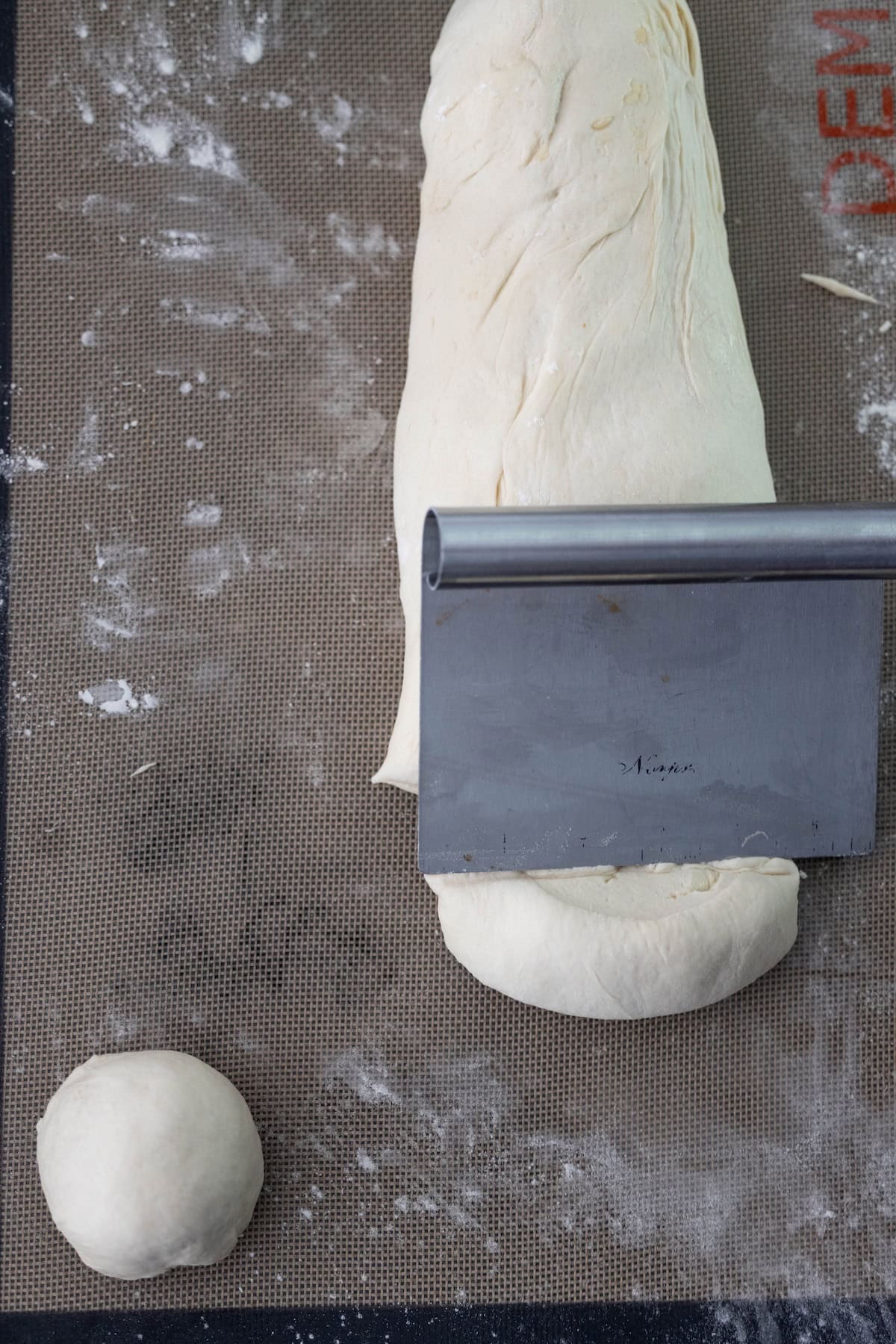
Knock back the risen dough and shape into a long oval shape. Cut 8 even rolls from the oval.
Shape Rolls
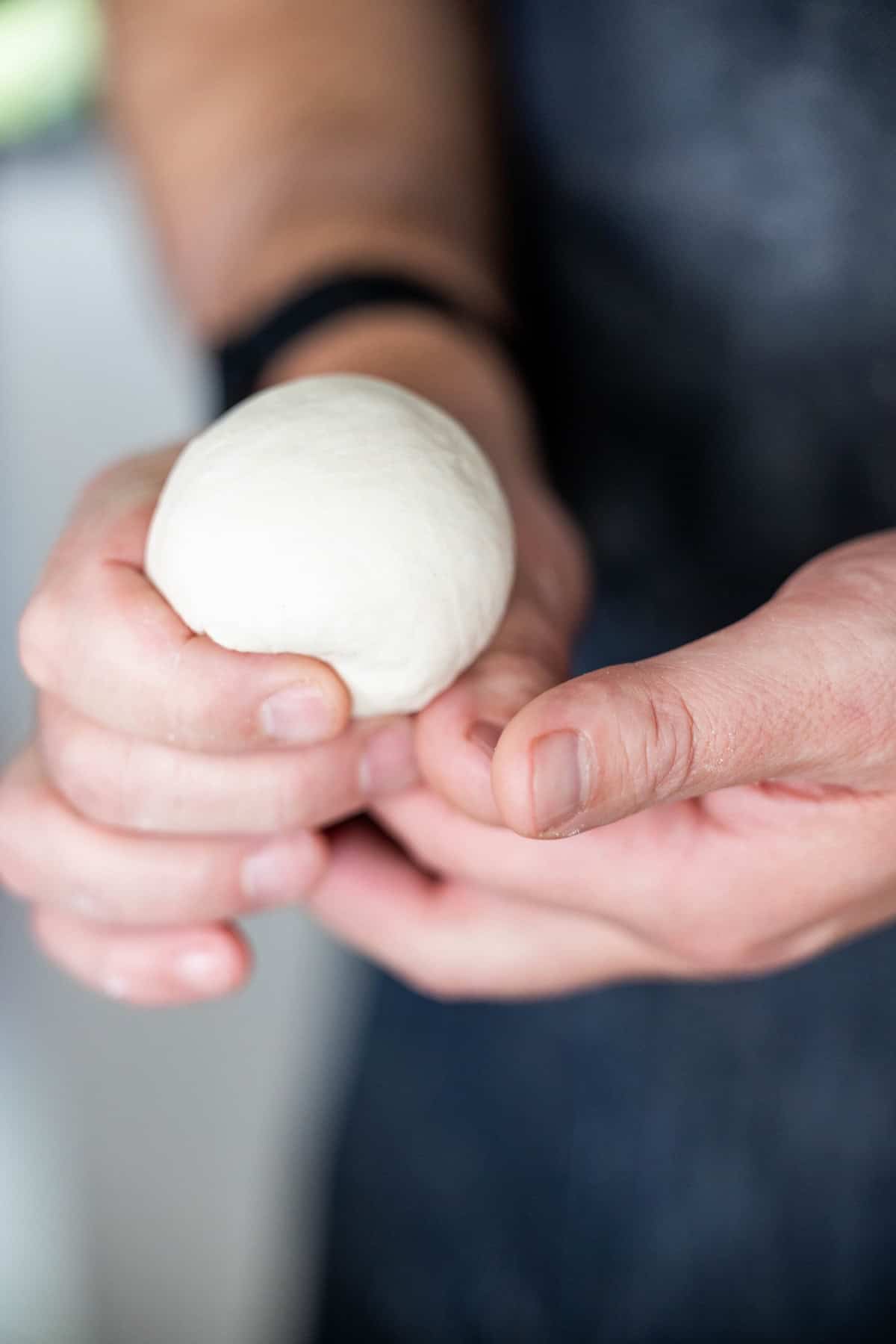
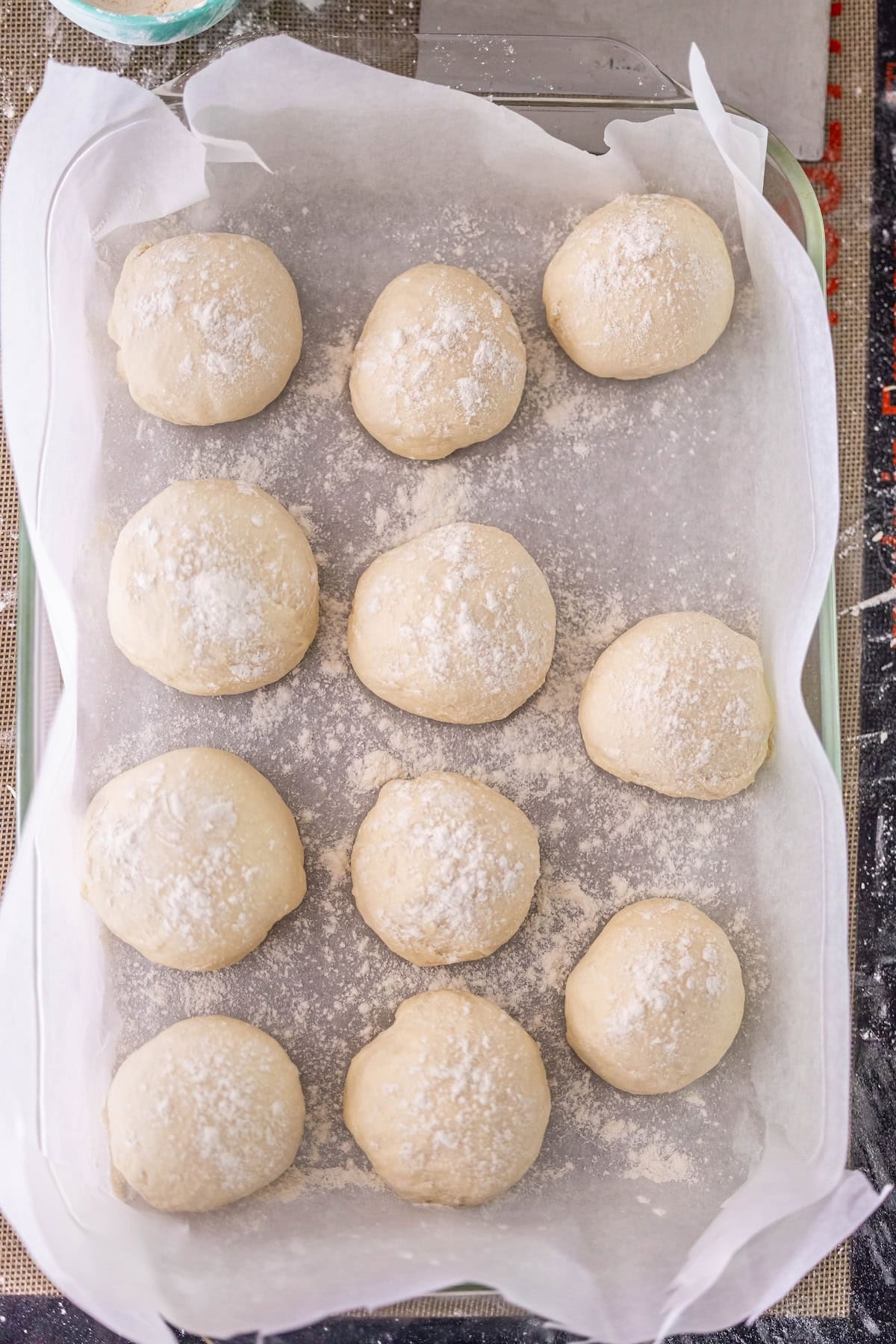
Roll each into a ball, then flatten gently with your palm (or a rolling pin) into a round about 4 inches wide. Tuck the seam of the dough ball on the bottom side of the roll.
Second Rise
Arrange the rolls on a floured or parchment-lined baking sheet, leaving a little space between them. Brush the tops with milk, then dust generously with flour. Cover loosely and prove for 15–20 minutes, until puffy.
Bake
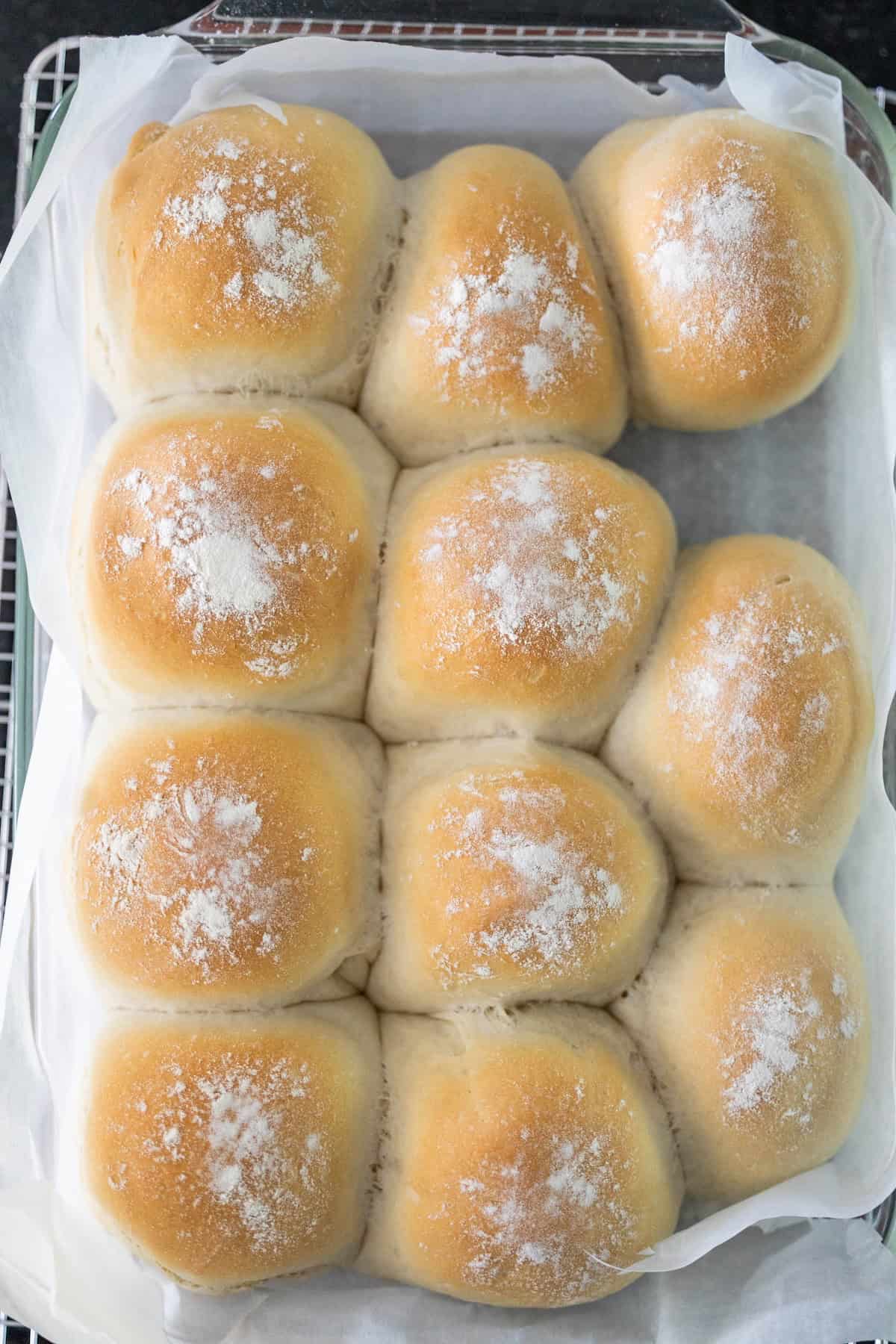
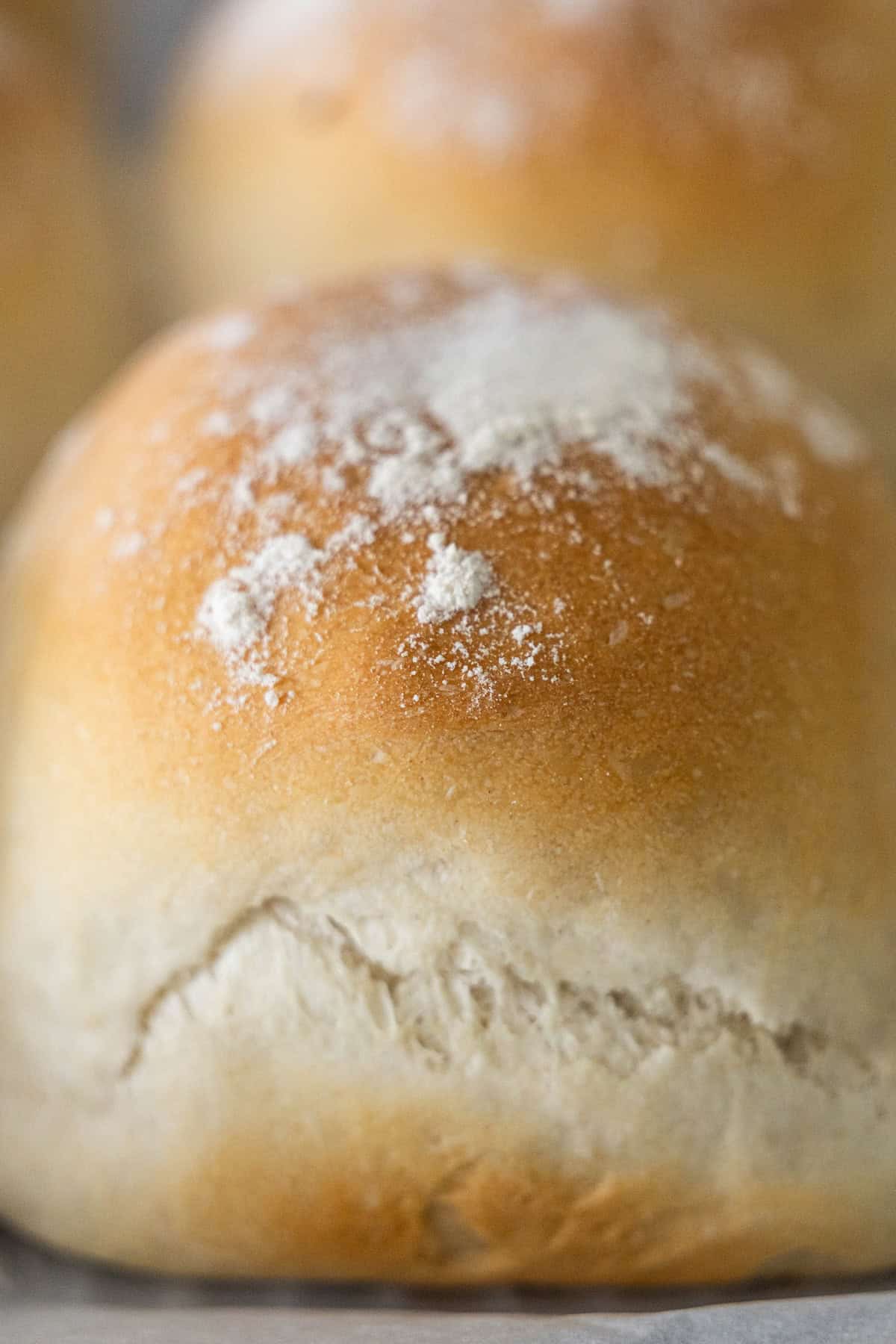
Bake in a preheated 400°F (200°C) oven for about 10 minutes, until just firm and very lightly golden – but still soft and pale on top. Don’t overbake; these are meant to be tender, not crusty.
Serve & Enjoy!
Let the rolls cool a few minutes, then split, butter, and fill while still warm.
Tips for Perfect Morning Rolls
Keep the dough slightly slack. A wetter dough makes softer rolls. It should be tacky and a little sticky – if it’s stiff and dry, your rolls will be dense. Add flour sparingly when kneading.
Don’t skip the floury top. Brushing with milk and dusting heavily with flour gives morning rolls their classic soft, powdery finish. It’s what separates a true bap from an ordinary dinner roll.
Press the centers before baking. A gentle thumb-press in the middle of each proved roll keeps them flat and wide, the way they should be, instead of puffing into domes – we prefer the domes, but pressing them makes a wider more sandwich like roll.
Bake hot and fast. Fifteen minutes max at 400°F. The goal is lightly golden – they should still look light. Overbaking gives you a hard crust and dry crumb, exactly what you don’t want.
Eat them fresh. Morning rolls are a same-day affair. They’re at their dreamy, soft best within a few hours of baking. Make the dough the night before and refrigerate it for an overnight rise if you want fresh rolls without the early alarm.
Use a milk-and-water mix. All milk makes them richer but slightly heavier; a 50/50 milk-and-water blend gives you the authentic light, soft texture.
Scottish Morning Rolls Recipe FAQs
They’re essentially the same soft, floury breakfast roll under regional names. “Bap” and “morning roll” are used widely, “softie” is common in eastern Scotland, and “Glasgow roll” or “floury roll” turns up in the west. The texture and method are the same.
Yes – this is the best trick for fresh morning rolls without getting up at dawn. After kneading, cover and refrigerate the dough overnight. In the morning, shape, prove, and bake. The cold, slow rise also deepens the flavor.
Usually overbaking or too much flour. Bake no longer than 10 minutes until barely golden, keep the dough slack, and don’t over-flour while kneading.
You can, and they’ll still be tasty, but strong bread flour (12–14% protein) gives the signature soft-yet-springy crumb. If using all-purpose, handle the dough gently.
Yes. Freeze fully cooled rolls in an airtight bag for up to 2 months. Thaw at room temperature and warm in a low oven for a few minutes to bring back their softness.
No. We use lard for ultimate softness, but butter works beautifully and is what most home cooks reach for.
What to Serve With Scottish Morning Rolls
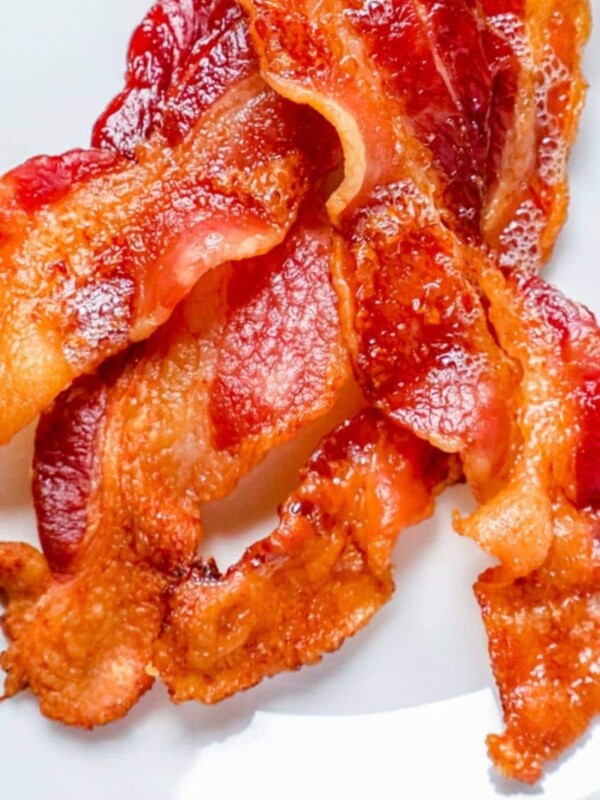
A full Scottish breakfast: eggs, bacon, sausage, grilled tomato, and beans
If you love these Scottish Morning Rolls as much as I do, please leave a five-star review below and share them on Facebook and Pinterest!


Scottish Morning Rolls
Ingredients
- 500 g about 4 cups strong white bread flour, plus extra for dusting
- 1 packet, 2¼ tsp / 7g active dry yeast
- 1 tsp granulated sugar
- 300 ml 1¼ cups warm water (about 105–110°F – warm to the touch, not hot)
- 50 ml 3 tbsp warm whole milk
- 1½ tsp fine salt
- 30 g 2 tbsp lard or softened unsalted butter (lard is the traditional choice)
Instructions
- Proof the yeast. Pour the warm water into a small bowl or measuring jug and stir in the sugar until dissolved. Sprinkle the yeast over the top, give it a gentle stir, and leave it somewhere warm for 5-10 minutes. When it's foamy and frothy on top, your yeast is alive and ready. (If nothing happens after 10 minutes, your water was too hot or the yeast is old – start fresh, it's worth it.)
- Make the dough. In a large bowl, whisk together the flour and salt. Rub in the lard or butter with your fingertips until the mixture looks like fine crumbs. Pour in the proofed yeast mixture and the warm milk, then stir until it comes together into a shaggy dough.
- Knead. Turn the dough out onto a lightly floured surface and knead for 8–10 minutes, until it’s smooth, soft, and springs back when you poke it. (Prefer a stand mixer? Use the dough hook on medium for about 6 minutes.)
- First rise. Place the dough in a lightly oiled bowl, cover with a clean tea towel, and leave somewhere warm for about 1 hour, or until doubled in size.
- Shape the baps. Gently knock the air out of the dough and divide it into 8 equal pieces. Roll each into a smooth ball, then flatten with your palm into a disc about 4 inches wide and ¾ inch thick – baps are meant to be soft and flattish, not high domes. Place them on a parchment-lined baking sheet, leaving a little space between each.
- Second rise. Dust the tops generously with flour, cover loosely, and let rise for another 25-30 minutes until puffy. Meanwhile, preheat your oven to 425°F (220°C).
- Dimple and bake. Just before baking, press your thumb gently into the center of each roll (this classic dimple keeps them from doming too much). Bake for 15-18 minutes, until the tops are pale golden and a roll sounds hollow when tapped on the bottom. For the softest crust, resist the urge to over-bake – Scottish baps stay light in color.
- Cool and enjoy. Transfer to a wire rack and, if you love that signature soft floury crust, dust with a little more flour while warm. Best eaten the day they're made – split one open with butter, or pile it high with bacon and a runny egg for the full Scottish breakfast experience.
Notes
- Keep the dough slack: A slightly wet, tacky dough makes the softest rolls – add flour sparingly when kneading.
- Floury top is essential: Brush with milk and dust generously with flour for the classic soft, powdery finish.
- Press the centers: A gentle thumb-press before baking keeps the rolls wide and flat instead of domed.
- Bake hot and fast: 400°F for about 10 minutes, just until barely golden – overbaking makes them hard.
- Overnight option: Refrigerate the kneaded dough overnight, then shape, prove, and bake in the morning for fresh rolls without the early start.
- Flour matters: Strong white bread flour (12-14% protein) gives the best soft-springy crumb.
- Storage: Best the day they’re baked. Freeze cooled rolls up to 2 months; warm in a low oven to reheat.
Nutrition
Nutrition information is automatically calculated, so should only be used as an approximation.