This post contains affiliate links. Please read our disclosure policy.
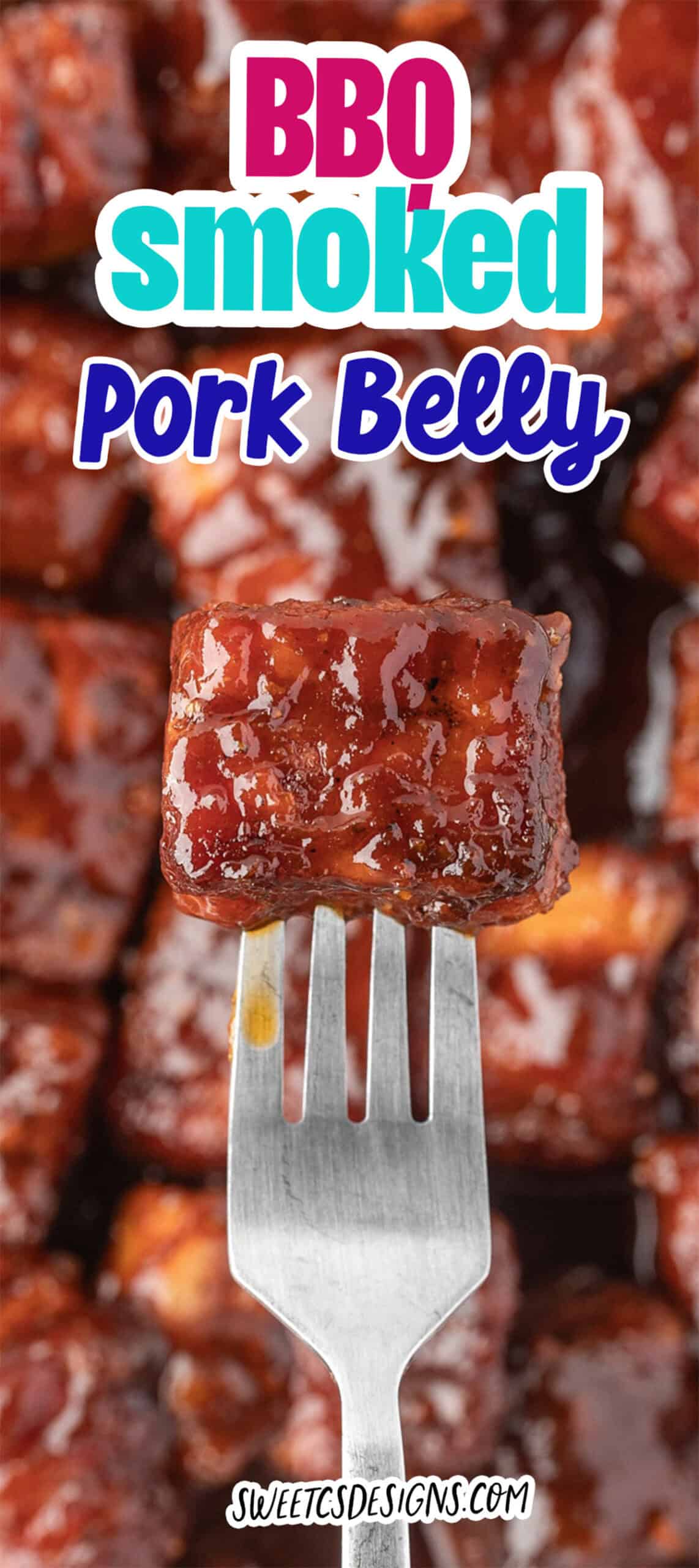
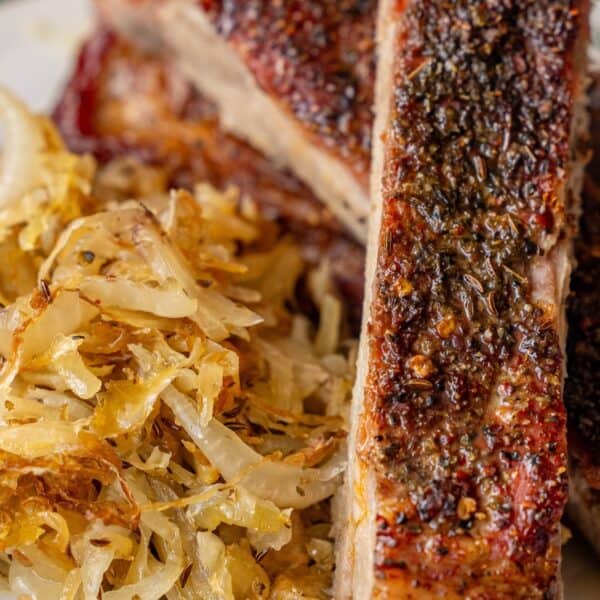
Here’s what pitmasters won’t tell you: pork belly makes for better burnt ends – if you love that classic rich smoky melt in your mouth burnt end flavor, just wait until you try Smoked Pork Belly Burnt Ends! Pork belly is cheaper, it’s fattier, and is more forgiving on the smoker – and develops a richer, crunchier, deep mahogany crust bark. These Smoked Pork Belly Burnt Ends are the recipe I reach for every single time I fire up the smoker, and the one I get more requests to make again than anything else!
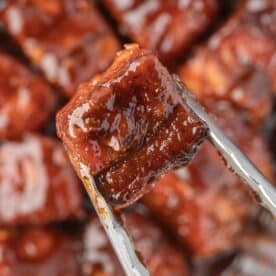
Pork belly bites are essentially a homemade version of the burnt ends that made Kansas City BBQ famous, but made with pork belly instead of brisket point. You season the cubes with a sweet-and-smoky dry rub, smoke them low and slow until a deep bark forms, then braise them in a buttery BBQ glaze until they’re fall-apart tender with slightly crispy edges. The result is a sticky, saucy bite that is genuinely hard to stop eating.
This recipe is written for a beginner-friendly smokers, you don’t need a fancy pellet grill or years of BBQ experience. If you can follow a simple timeline and resist the urge to rush it, you’ll pull off something that looks (and tastes) like it came from a competition BBQ circuit.


Don’t want all the extras in a recipe post? We provide a skip to recipe button in the top left corner, as well as a clickable table of contents, just below, to help make this page easier to navigate.
At Sweet C’s, I add lots of tips in all of my recipes – because I am a home cook without any formal training, and I find I am more confident making dishes when I understand why it works, and what each ingredient means to the flavor of a recipe. My goal is for even the most beginner home cook to feel empowered in the kitchen.
Table of Contents
Why Pork Belly Beats Brisket for Burnt Ends
The traditional burnt end comes from the flat of a whole brisket — specifically the fattier ‘point’ cut that gets separated, cubed, and returned to the smoker. Brisket burnt ends are incredible, but they’re also expensive, time-consuming (12+ hours), and unforgiving if you pull them too early or run your smoker too hot.
Pork belly has the same fat-to-meat ratio that makes burnt ends so good, but it smokes in about 4 hours, costs a fraction of the price, and is available in pre-sliced strips at Costco that make the whole process even easier. The higher fat content means more rendering, more glaze adhesion, and a richer, more indulgent final bite.
Short version: if you want the burnt-end experience without the all-day brisket commitment, pork belly is the answer.
Which Wood Gives The Best Smoke For Pork Belly
Wood choice makes a real difference in the flavor profile of your finished pork belly bites. Here’s how the common options stack up:
- Cherry – Our top pick for pork belly. Mild, sweet, slightly fruity smoke that complements the richness of the fat without overpowering it. Turns the bark a deep, beautiful mahogany red.
- Apple – Even milder than cherry. Great if you want the smoke to play a supporting role behind the rub and glaze. Subtle, slightly sweet. Good choice for first-time pork belly smokers.
- Hickory – The classic American BBQ wood. Stronger, earthier, and more assertive than fruitwoods. Excellent paired with cherry or apple (50/50 blend) to add depth without going too smoky.
- Pecan – A happy middle ground. Nuttier and slightly sweeter than hickory, stronger than fruitwoods. One of the best single-wood options for pork belly if you want full flavor.
- Avoid – Mesquite alone. The intensity overwhelms pork belly’s fat. If you love mesquite flavor, use it sparingly blended with apple (80/20 apple-to mesquite).
- Our Recommendation – Cherry + a few chunks of hickory. You get the color and sweetness of cherry, with just enough earthy depth from the hickory to make it taste complex.
How to Smoke Pork Belly Bites
We designed this recipe to be super simple – just like our smoked pork ribs – so you can have the confidence to get it right your first time, and everytime!
BBQ Pork Belly Bites Ingredients
To make this recipe, we will need the following ingredients:
Dry Rub Ingredients:
- 3 tablespoons brown sugar: Adds sweetness and helps form a caramelized crust (bark) on the pork belly during smoking.
- 1 tablespoon paprika: Contributes mild earthiness and a warm red color to the rub.
- 1 tablespoon smoked paprika: Enhances the smoky depth of flavor, reinforcing the smoke from the wood and adding a subtle heat.
- 1½ teaspoons kosher salt: Essential for seasoning the meat and helping draw out moisture, which improves texture and allows the rub to penetrate the pork.
- 1 teaspoon black pepper: Adds sharpness and a mild heat that balances the sweetness of the sugar and BBQ sauce.
- 1 teaspoon garlic powder: Provides deep, savory flavor and helps round out the spice blend.
- 1 teaspoon onion powder: Adds a mellow, sweet-savory base note that complements garlic and pepper.
- ½ teaspoon chili powder (optional): Offers a mild heat and earthy chili depth that intensifies the flavor complexity if you want a bit of a kick.
Glaze Ingredients (Added at the End):
- ½ to ¾ cup BBQ sauce (e.g., Sweet Baby Ray’s): Gives a sweet, tangy, sticky coating. Provides classic BBQ flavor with caramelization during the final cooking phase.
- 2 tablespoons brown sugar: Boosts sweetness and helps thicken and caramelize the glaze for a glossy finish.
- 2 tablespoons honey: Adds floral sweetness and viscosity to bind the glaze to the pork belly pieces.
- 2 tablespoons unsalted butter, cut into chunks: Enriches the glaze and softens the sweetness with a silky texture, while balancing heat if chili is used.
For the Meat & Smoking:
- Water pan for smoker: Helps maintain a consistent temperature and moisture level inside the smoker, preventing the pork from drying out and allowing better smoke adhesion.
- 3 to 4 pounds pork belly, cut into 1½ to 2-inch cubes: Rich, fatty, and flavorful cut perfect for smoking. The high fat content renders during the cook, resulting in tender, juicy cubes with crispy edges.
- Wood chunks (cherry, hickory, or apple): Add specific smoke flavor.
- Cherry: mild and sweet
- Hickory: stronger, classic BBQ flavor
- Apple: lightly fruity and subtle
Smoked Pork Belly Method, Step by Step
Once you’ve gathered your ingredients, we will use the following process:

Prep
Preheat your smoker to 250°F using indirect heat. Place a water pan in the smoker to help maintain moisture and catch drippings.
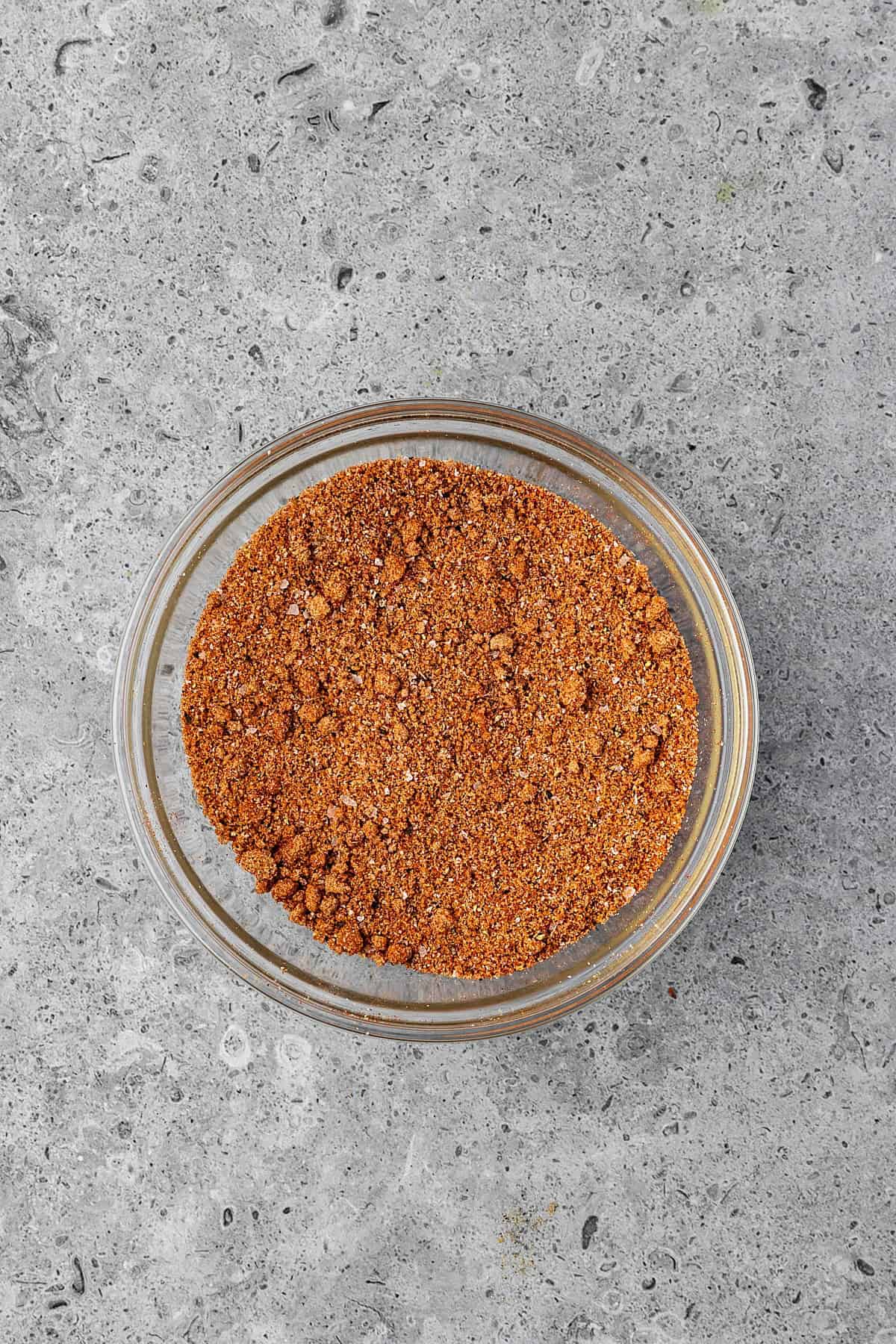
Make Rub
Mix the rub ingredients in a small bowl.
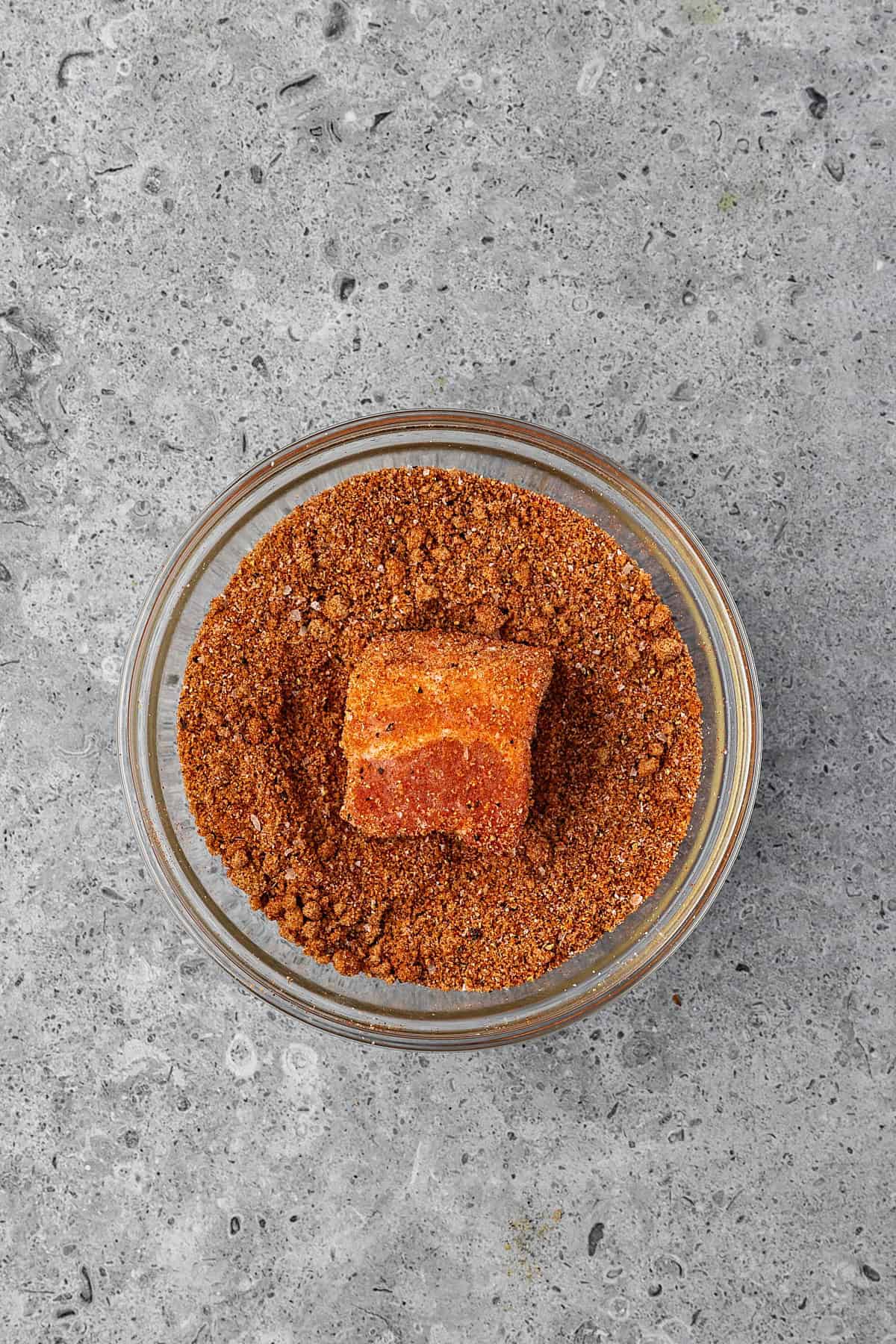
Season Pork Belly
Coat each pork belly cube thoroughly on all sides.
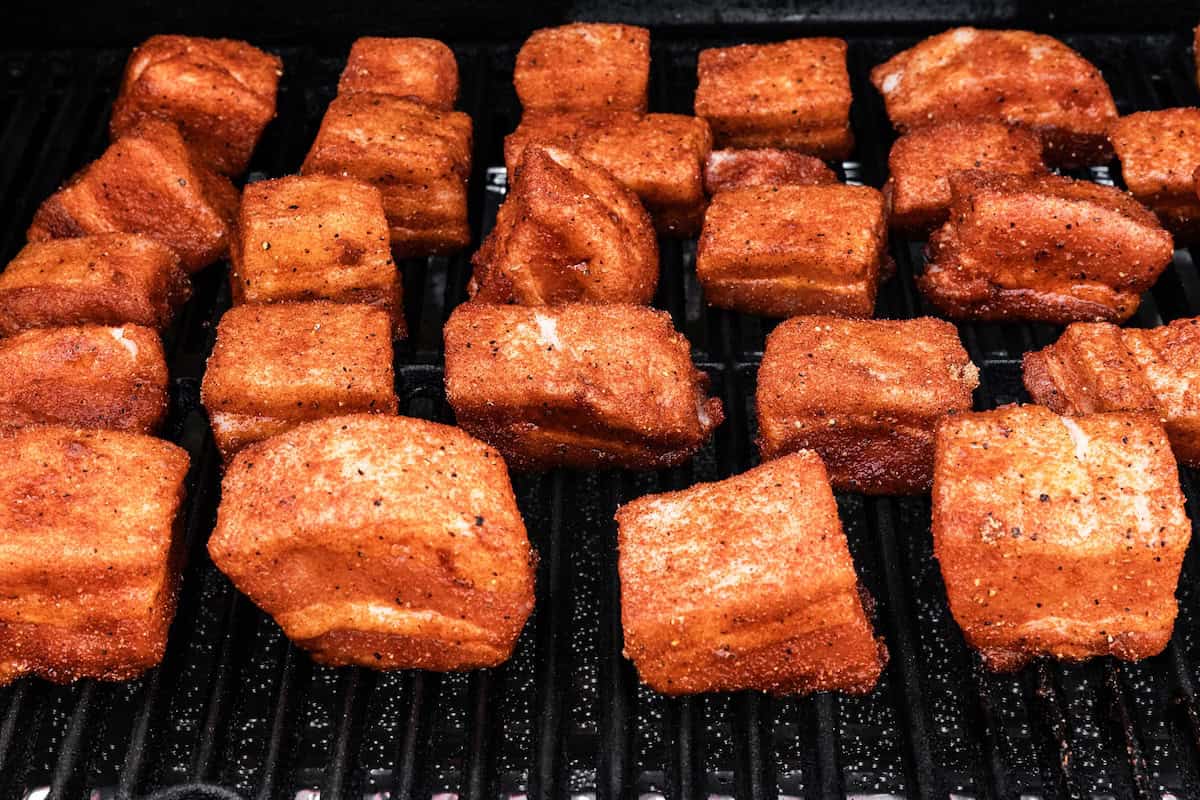
Smoke
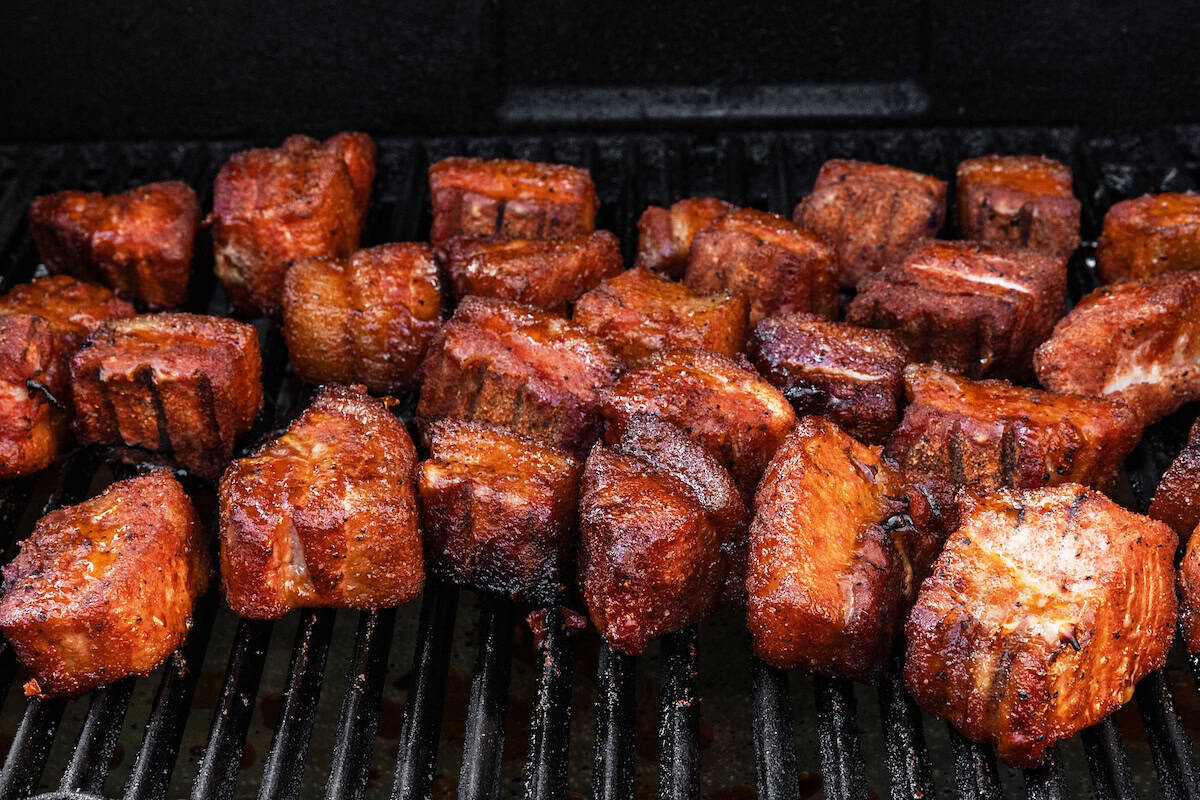
Arrange the pork belly on a wire rack or directly on the smoker grates, leaving space between each piece for airflow.
Develop Bark
Smoke for 2½ to 3 hours, or until a deep bark forms and the internal temperature reaches around 190°F. Spritz every 45–60 min with apple juice or cider vinegar.
Sauce & Butter
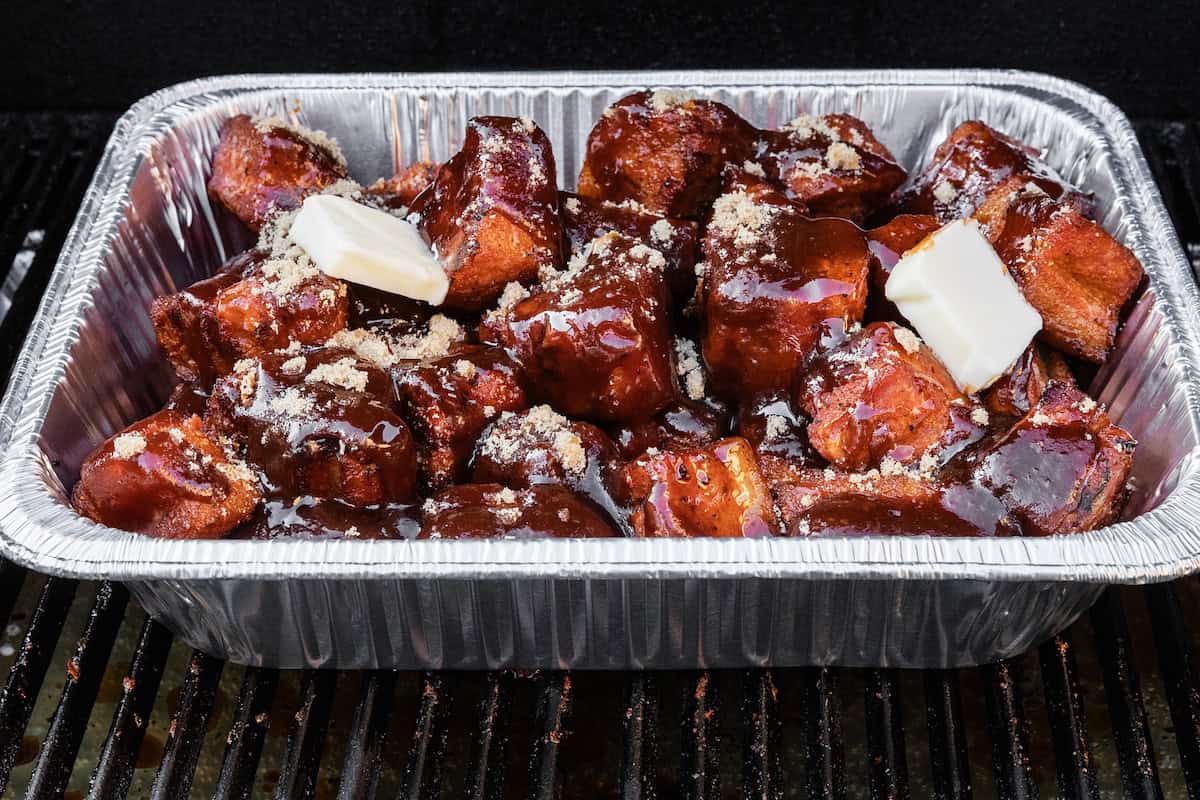
Transfer the pork belly to a foil pan. Add the BBQ sauce, brown sugar, honey, and butter. Toss gently to coat.

Develop Sauce
Cover the pan with foil and return to the smoker for another 60 to 90 minutes, or until the pork reaches 200 to 205°F and becomes fall-apart tender.
Thicken & Crisp
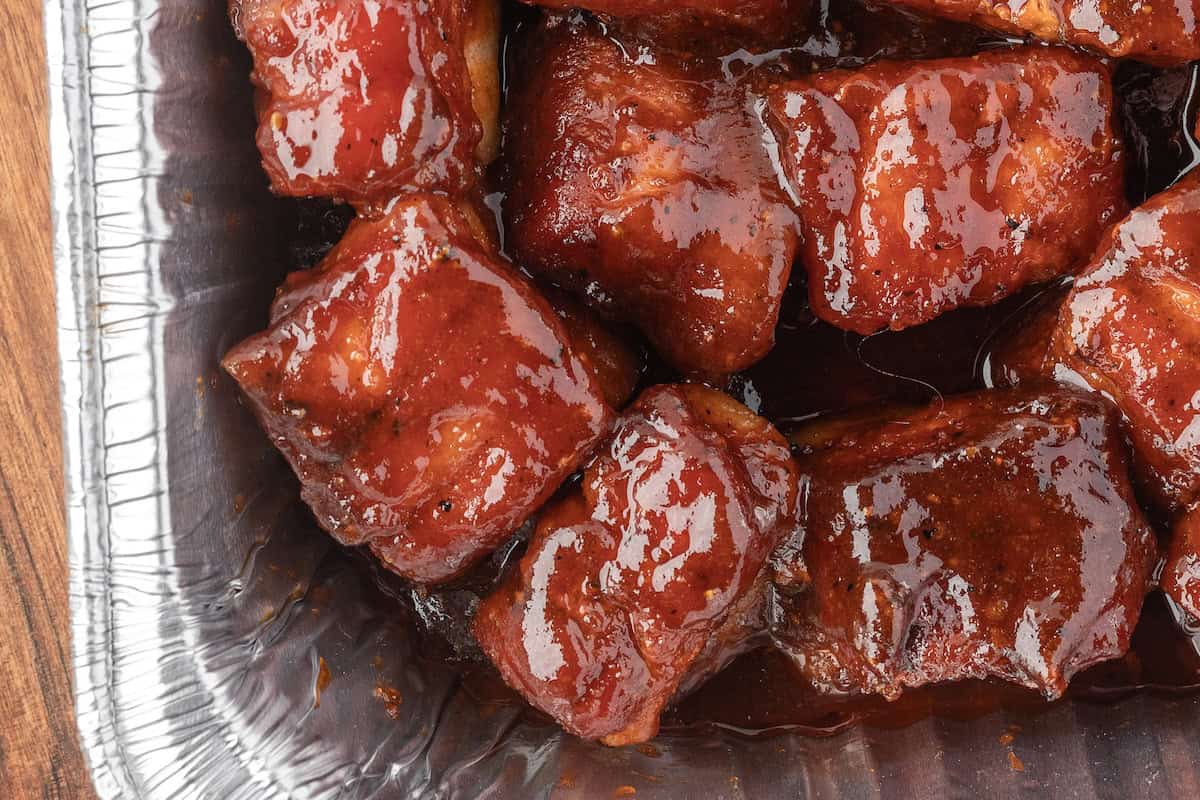
Remove the foil and smoke uncovered for an additional 15 to 20 minutes to thicken the glaze and give slight crisp texture (broil for 5-10 minutes for even more), stirring once or twice as it caramelizes.
Serve & Enjoy!
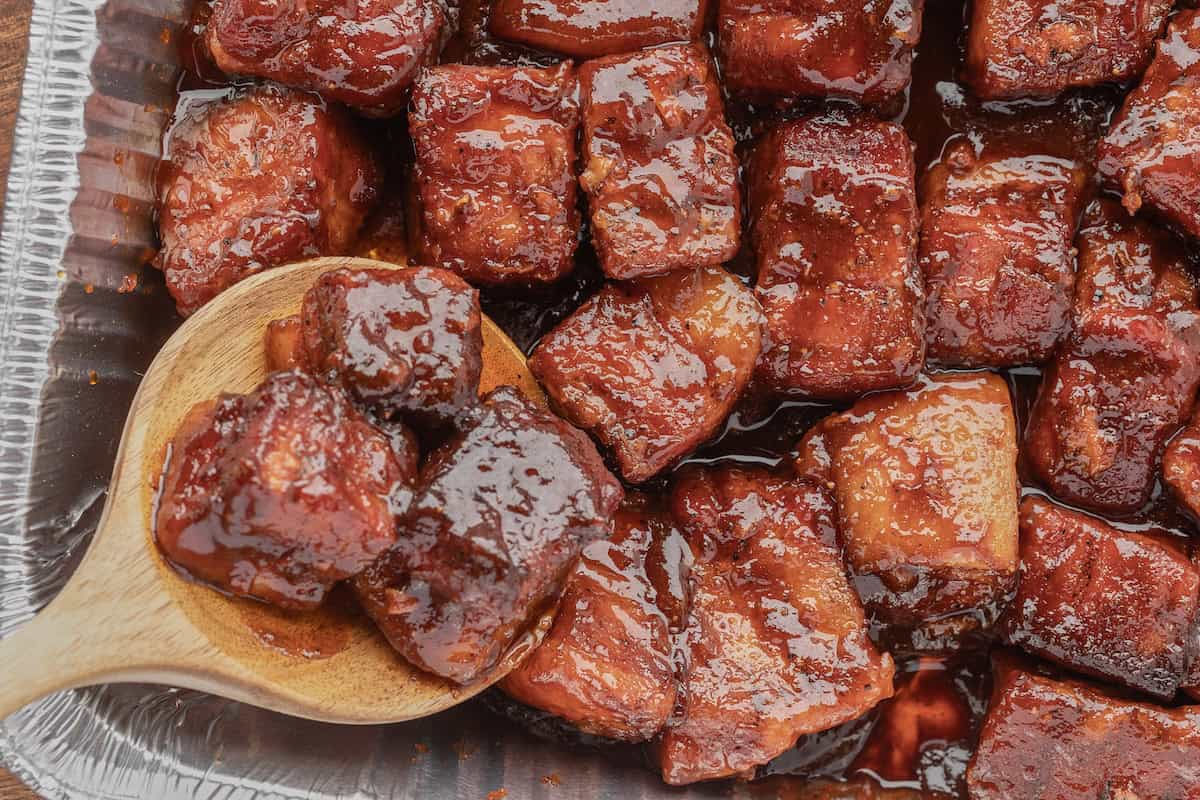
Let rest for 10 to 15 minutes before serving.
Tips and Tricks for Perfect Smoked Pork Belly
Use skinless pork belly: Skin-on pork belly can be tough and chewy in BBQ applications. Use skinless pork belly with good fat marbling for the best bite and texture.
Cut into even cubes: Slice pork belly into 1½ to 2-inch cubes so they cook evenly and get a balanced amount of smoke and glaze on each piece.
Apply a balanced dry rub: Use a sweet-and-savory rub with brown sugar, salt, smoked paprika, garlic, and pepper. Let it sit for at least 15–30 minutes to absorb flavor before smoking.
Smoke low and slow: Cook at 225–250°F for the first few hours. This allows the fat to render slowly and infuses the meat with smoke without drying it out.
Use fruitwood for mellow smoke: Apple, cherry, or a blend of fruitwoods with hickory gives balanced, aromatic smoke that complements the fatty richness of the pork.
Spritz for moisture and bark development: Spritz the pork every hour with apple juice, cider vinegar, or water to keep it moist and encourage bark formation without burning the sugar in the rub.
Wrap or pan once tender: Once the pork belly cubes are mahogany-colored and have a good bark, transfer them to a foil pan or wrap them in foil with butter, honey, and brown sugar. This helps soften and glaze the meat.
Finish with BBQ glaze: Toss the pork belly in a sweet, sticky BBQ sauce and return to the smoker (uncovered) for another 15–30 minutes to set the glaze and crisp the edges slightly.
Rest before serving: Let the finished cubes rest 10–15 minutes before serving. This allows juices to redistribute and keeps the bites tender and moist.
Don’t rush the cook: BBQ pork belly usually takes 3.5 to 4.5 hours total. Cook to texture, not just time—the fat should render fully, and each cube should feel tender but hold its shape when picked up.
Use skinless pork belly. Skin-on works in other applications but won’t render properly at BBQ temps.
Cut into even 1½ to 2-inch cubes. Inconsistent sizes = inconsistent cooking. Smaller pieces dry out; larger pieces take too long to render.
Don’t rush the smoke. 4 to 4.5 hours total is normal. Cook to texture, not just temperature – the probe should slide in with zero resistance before you call it done.
Spritz consistently but not obsessively – every 45 to 60 minutes is perfect. More frequent spritzing lowers the smoker temp every time you open the lid.
Don’t sauce too early. Adding the glaze before the bark is fully set will soften and steam the crust you worked to build. Wait until you can see a deep mahogany bark before going into the foil pan.
Reheating Pork Belly Burnt Ends
Pork belly burnt ends reheat beautifully if you do it right – and turn dry and chewy if you don’t.
BEST METHOD – OVEN: Place leftovers in acovered baking dish with 2 tablespoons of extra BBQ sauce or a splash of apple juice. Cover tightly with foil and reheat at 300°F for 20–25 minutes. Remove foil for the last 5 minutes to re-caramelize the glaze.
QUICK METHOD – SKILLET: Reheat over medium-low heat in a nonstick pan with a splash of BBQ sauce. Cover and heat for 5–6 minutes, stirring once. Works great for small portions.
AVOID: The microwave. It steams the glaze off and makes the texture rubbery. Just don’t.
MAKE AHEAD TIP: These actually improve overnight. The fat continues to render slowly in the fridge and the bark re-firms up slightly. Make them the day before a party and reheat in the oven – they’ll be arguably better the next day!


What to Serve With Smoked Pork Belly Bites
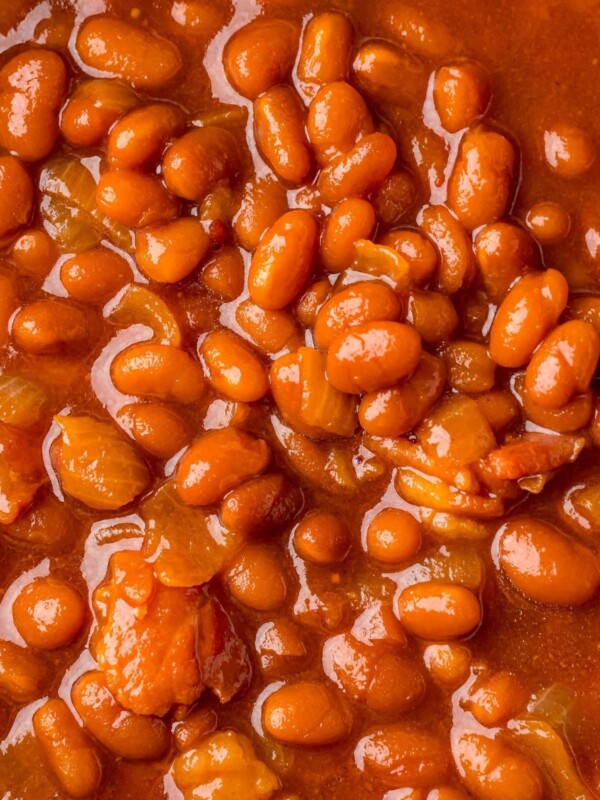
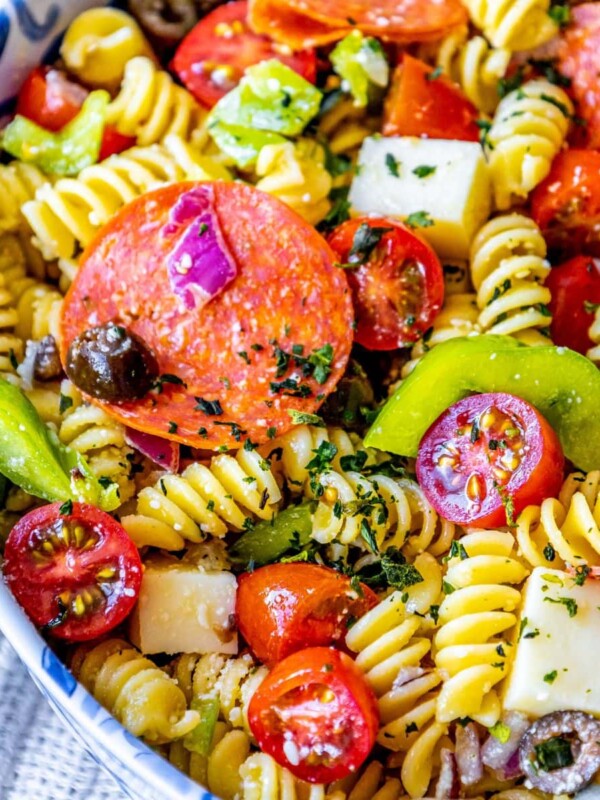
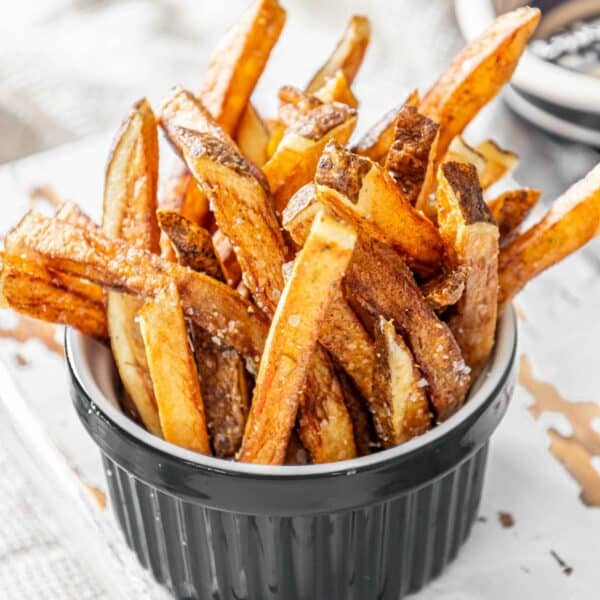
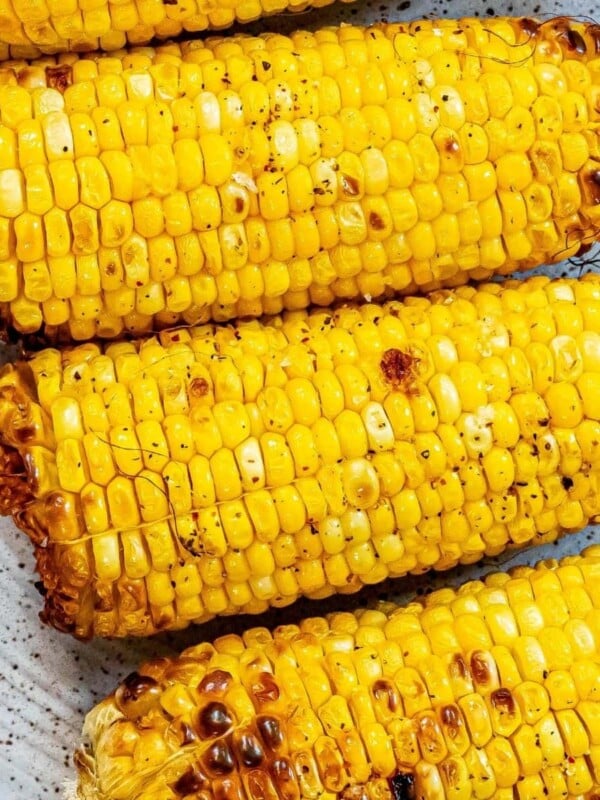
If you love this easy recipe please click the stars below to give it a five star rating and leave a comment! Please also help me share on Instagram, Facebook, and Pinterest!
Share on Facebook
SharePin this now to find it later
Pin ItFollow on Instagram
If you love this easy recipe please click the stars below to give it a five star rating and leave a comment! Please also help me share on Instagram, Facebook, and Pinterest!
Share on Facebook
SharePin this now to find it later
Pin ItFollow on Instagram
Pork Belly Burnt Ends
Ingredients
For the rub:
- 3 tablespoons brown sugar
- 1 tablespoon paprika
- 1 tablespoon smoked paprika
- 1½ teaspoons kosher salt
- 1 teaspoon black pepper
- 1 teaspoon garlic powder
- 1 teaspoon onion powder
- ½ teaspoon chili powder, optional
For the glaze:
- ½ to ¾ cup BBQ sauce – we used Sweet Baby Ray’s
- 2 tablespoons brown sugar
- 2 tablespoons honey
- 2 tablespoons unsalted butter, cut into chunks
For the meat:
- 3 to 4 pounds pork belly, cut into 1½ to 2-inch cubes
- Wood chunks such as cherry, hickory, or apple
- Water pan for smoker
Instructions
- Preheat your smoker to 250°F using indirect heat. Place a water pan in the smoker to help maintain moisture and catch drippings.
- Pat the pork belly pieces dry with paper towels. If using Costco pork belly strips, slice them crosswise into 1½ to 2-inch chunks.
- Mix the rub ingredients in a small bowl. Coat each pork belly cube thoroughly on all sides.
- Arrange the pork belly on a wire rack or directly on the smoker grates, leaving space between each piece for airflow.
- Smoke for 2½ to 3 hours, or until a deep bark forms and the internal temperature reaches around 190°F. Spritz every 45–60 minwith apple juice or cider vinegar.
- Transfer the pork belly to a foil pan. Add the BBQ sauce, brown sugar, honey, and butter. Toss gently to coat.
- Cover the pan with foil and return to the smoker for another 60 to 90 minutes, or until the pork reaches 200 to 205°F and becomes fall-apart tender.
- Remove the foil and smoke uncovered for an additional 15 to 20 minutes to thicken the glaze, stirring once or twice as it caramelizes.
- Let rest for 10 to 15 minutes before serving.
Notes
Nutrition
Nutrition information is automatically calculated, so should only be used as an approximation.
Burnt Ends from Pork Belly FAQs
Use skinless pork belly with good fat marbling. The skin is too tough for low-and-slow BBQ and won’t render well. Look for even thickness to ensure uniform cooking.
Cut it into 1½ to 2-inch cubes. Smaller pieces may dry out, and larger pieces take longer to cook evenly. Uniform cubes ensure consistent texture and glaze coverage.
Smoke at 225–250°F. This low-and-slow temperature lets the fat render gently, keeping the meat moist and flavorful.
Use fruitwoods like apple, cherry, or peach for sweet, mellow smoke. Hickory or pecan can be added for a stronger, more traditional BBQ flavor.
Generally 3½ to 5 hours, depending on cube size and smoker temp. It’s done when the pork is tender and the fat is fully rendered—check for a soft, bouncy feel when pressed.
Yes. Spritzing with apple juice, cider vinegar, or water every 45–60 minutes helps keep the surface moist, develop a better bark, and prevent burning sugars in the rub.
Yes, after the initial smoke phase (once the bark sets, usually around 2 hours). Place the cubes in a foil pan with butter, honey, and brown sugar or wrap them to tenderize and caramelize.
Add glaze during the final 30–45 minutes of cooking, uncovered, to set the sauce and slightly crisp the edges. The sugar in the glaze will caramelize and thicken.
The cubes should be tender and jiggly, but not falling apart. A probe should slide in with little resistance. Internal temp can range from 190–205°F, but texture matters more than temperature.
Yes. Let cool slightly, then refrigerate. Reheat covered in the oven at 300°F or warm gently in a smoker or skillet. You may need to refresh with a little extra glaze or sauce before serving.