This post contains affiliate links. Please read our disclosure policy.
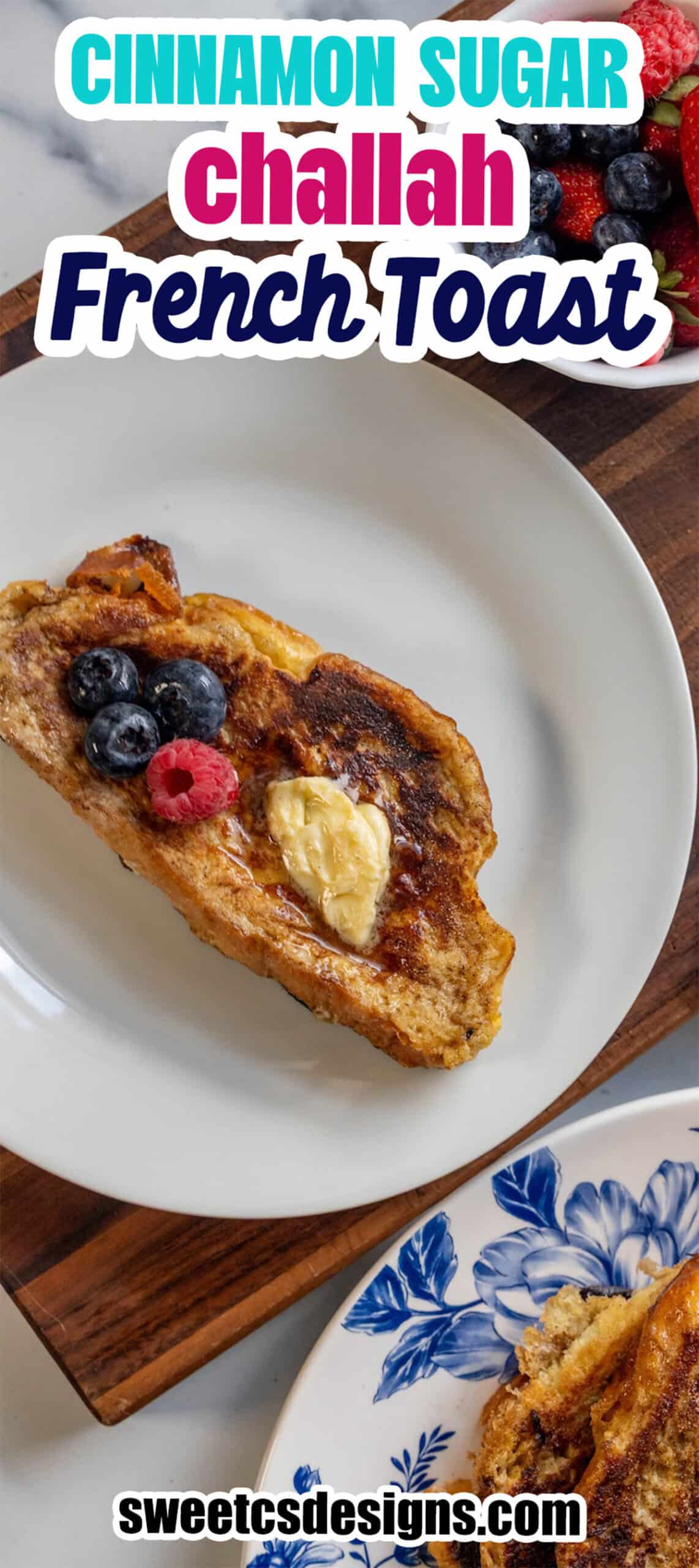
My Challah French Toast uses day-old challah bread to make thick, perfect slices of French toast that are light and fluffy inside and have a delicious, crispy cinnamon-sugar crunch on the outside. I love to make this on weekends for my kids – it is their favorite type of French toast!
My French toast trick is to dip the bread in an egg and milk custard mix that is spiked with vanilla and some cinnamon sugar, so it not only has that rich custard flavor we all love – the cinnamon sugar creates a little bit of a creme brulee-like candied crunch on the outside. I also always add a sprinkle of cinnamon sugar on each side of the toast as it cooks, to get an extra-crisp, sweet crust.
I’ve spoiled my kids with this method – they don’t like French toast any other way!


Don’t want all the extras in a recipe post? We provide a skip to recipe button in the top left corner, as well as a clickable table of contents, just below, to help make this page easier to navigate.
At Sweet C’s, I add lots of tips in all of my recipes – because I am a home cook without any formal training, and I find I am more confident making dishes when I understand why it works, and what each ingredient means to the flavor of a recipe. My goal is for even the most beginner home cook to feel empowered in the kitchen.
Table of Contents
Why You’ll Love This Easy French Toast Recipe
- Day-old challah makes the richest, most custardy French toast you’ll ever have
- A sprinkle of cinnamon sugar right on the skillet creates an extra-sweet, crispy crust on every slice
- Simple pantry ingredients come together in about 20 minutes
- A weekend breakfast that feels special without any complicated technique
Challah French Toast Ingredients
- 1 loaf day-old challah, sliced into 8 slices about 1-inch thick – the star of the dish; day-old challah is sturdy enough to soak up the custard without falling apart, while still turning out soft and rich in the center
- 4 large eggs – the base of the custard, giving the French toast its rich texture and helping it turn golden as it cooks
- 2 tablespoons vanilla extract – adds warm, sweet flavor that pairs perfectly with the cinnamon sugar
- 1 teaspoon cinnamon sugar, plus more for sprinkling while cooking – infuses the custard with flavor, and creates a caramelized, crackly crust when cooked on the skillet
- 1 teaspoon Celtic salt – balances the sweetness and rounds out the flavor of the custard
- 2 oz milk – thins the custard just enough for the challah to soak it up evenly without getting soggy
- Butter, for the skillet – griddling in butter gives the French toast a rich flavor and helps it turn deep golden brown
- Maple syrup and butter, for serving – the classic finishing touch
Equipment Needed To Make The Best French Toast
- Large skillet or griddle
- Shallow dish or pie plate, for dipping
- Whisk
- Spatula
How to Make Challah French Toast
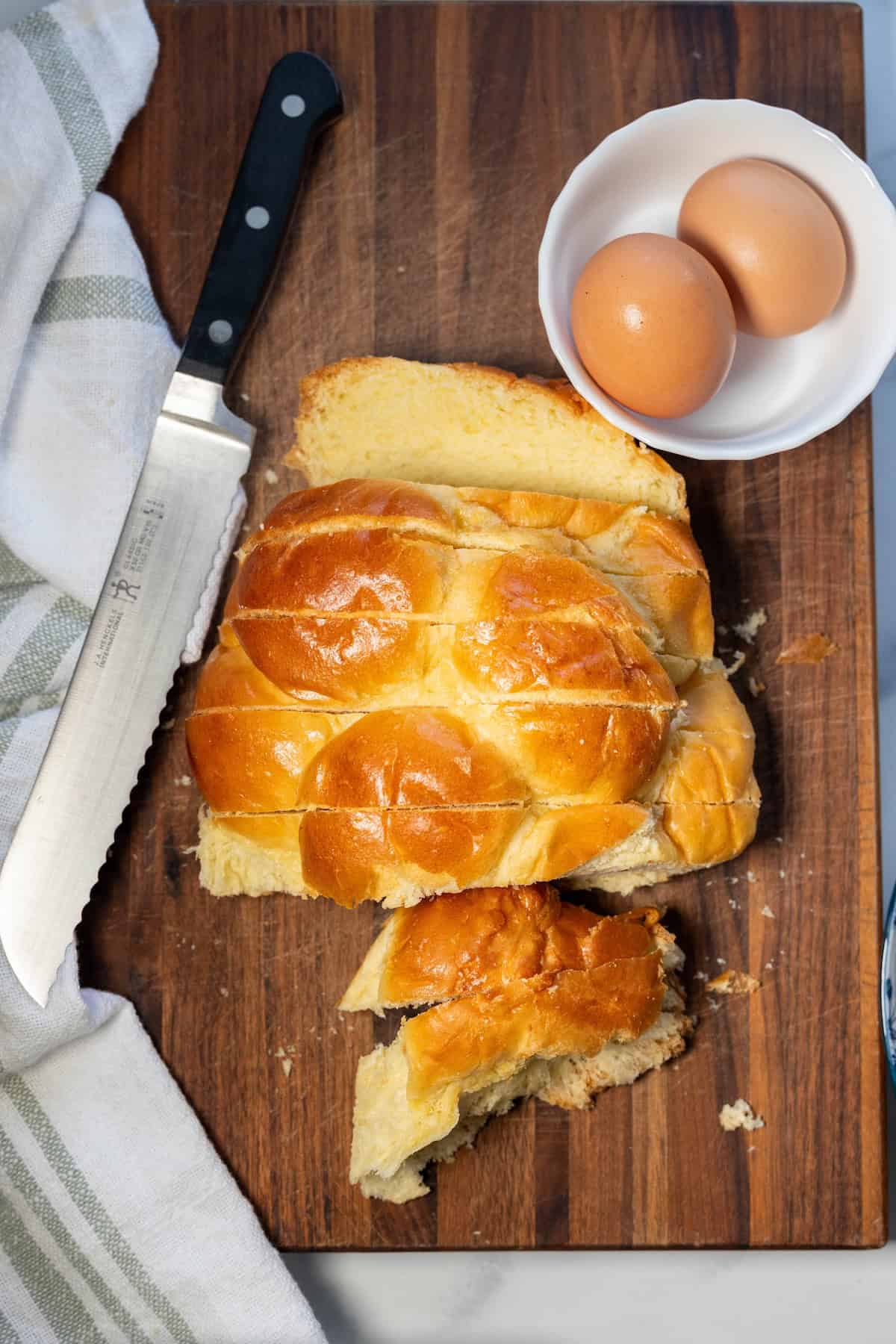
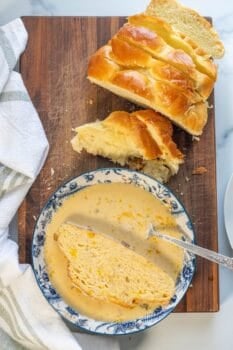
Slice Challah
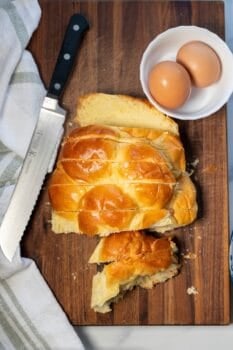
Cut the day-old challah loaf into slices about 1-inch thick. here
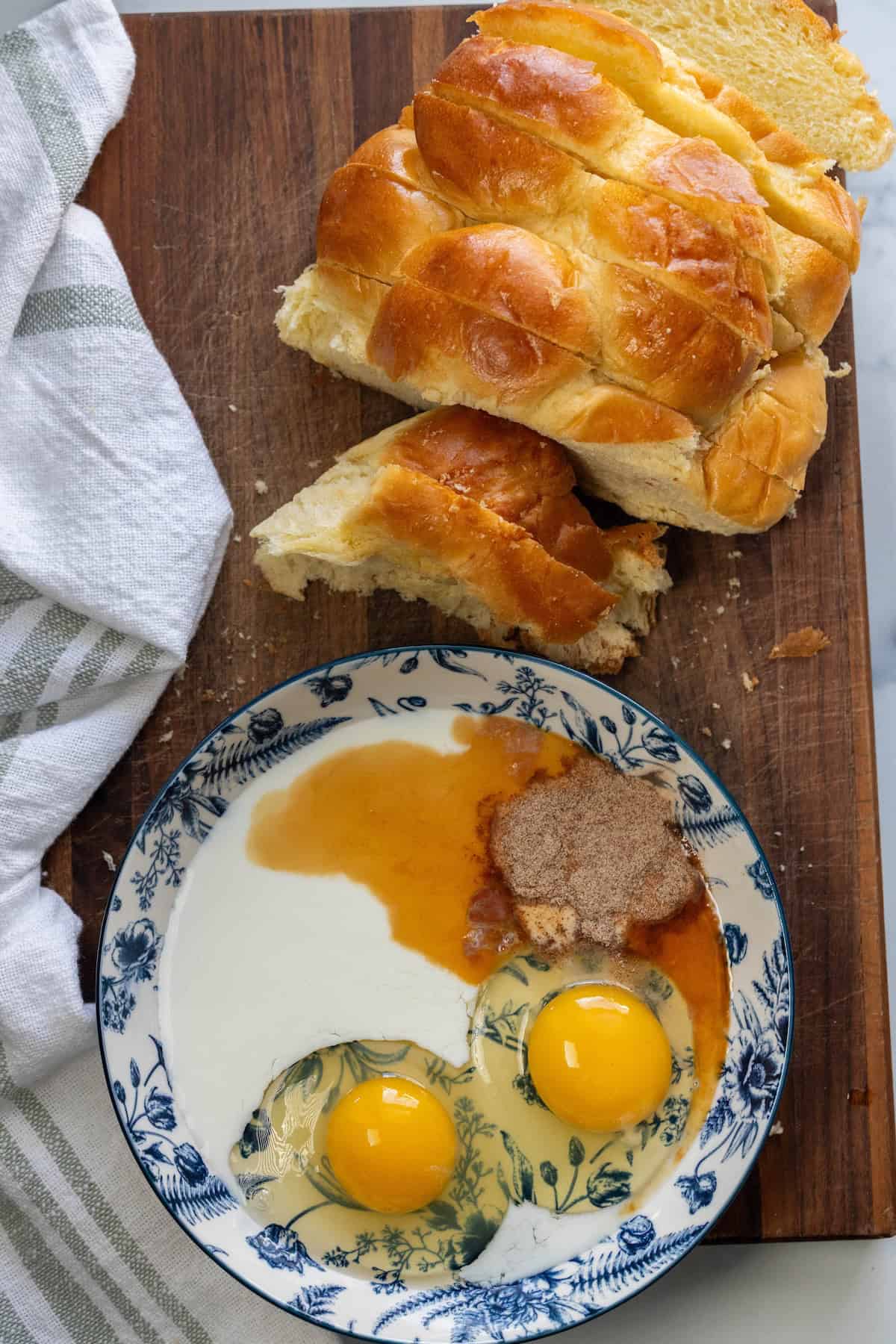
Make Custard
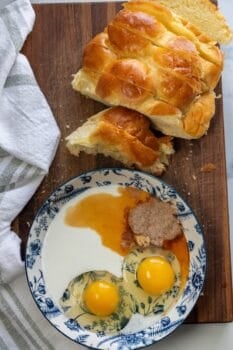
In a shallow dish, whisk together the eggs, vanilla, 1 teaspoon cinnamon sugar, Celtic salt, and milk until fully combined. goes here
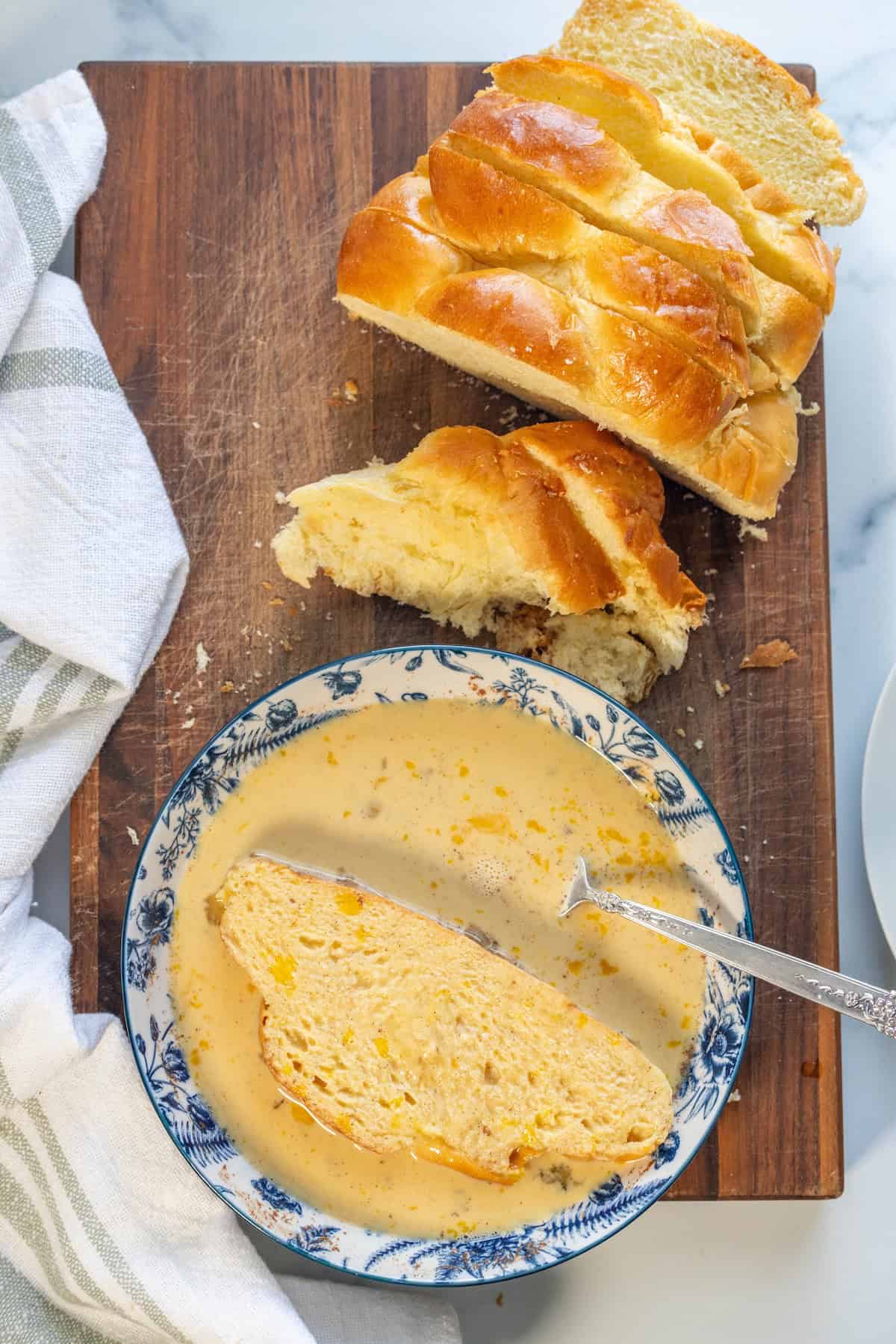
Dip Bread
Dip each slice of challah into the custard mixture, letting it soak for a few seconds on each side so it fully absorbs the egg mixture without falling apart.
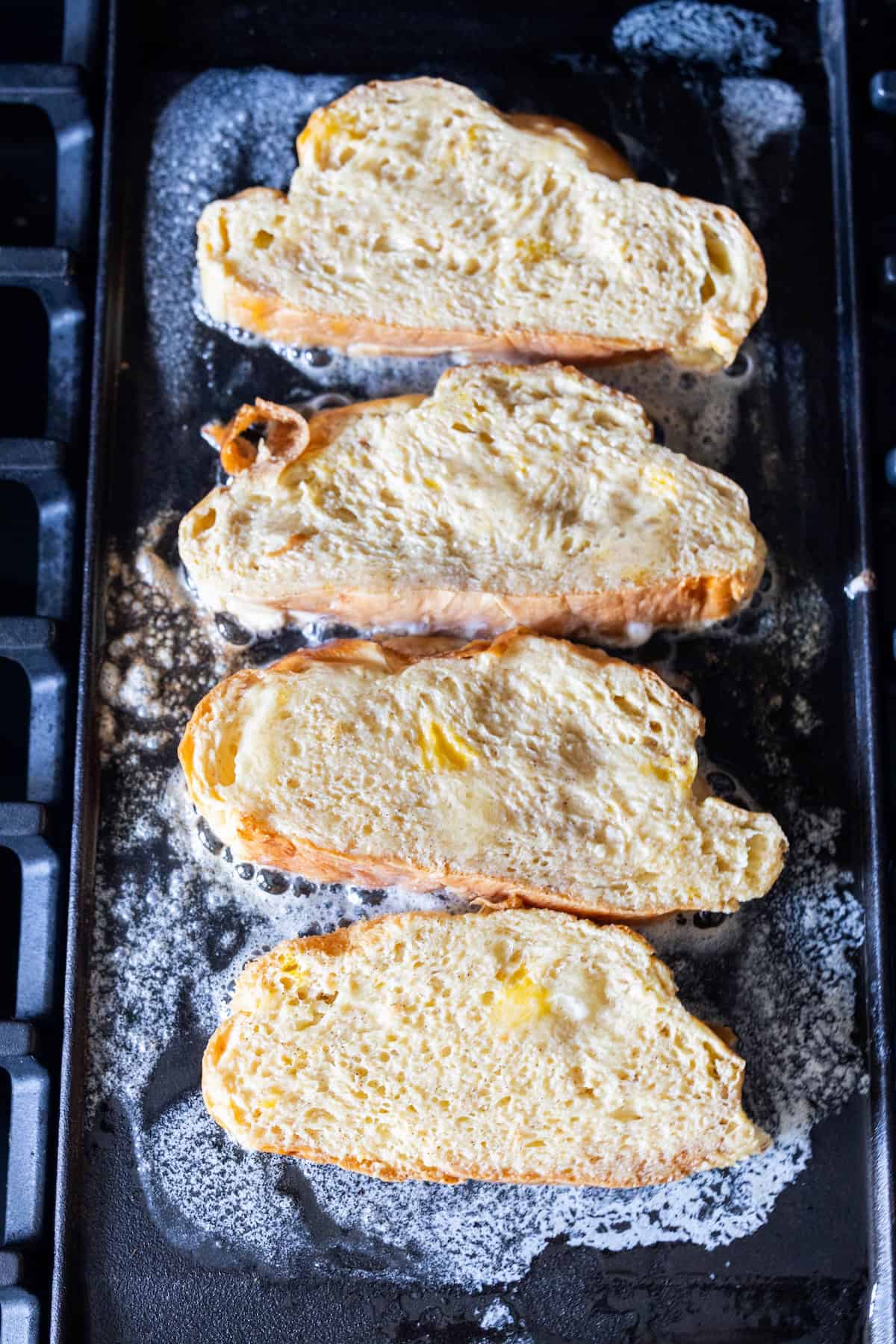
Griddle Bread
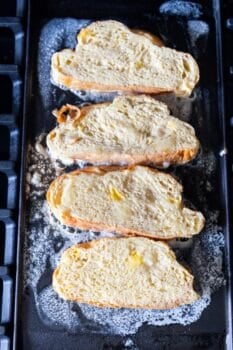
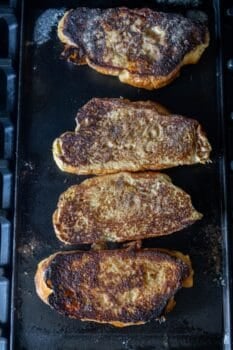
Melt butter in a large skillet or griddle over medium heat. Add the dipped challah slices and cook until golden brown, about 3-4 minutes per side.
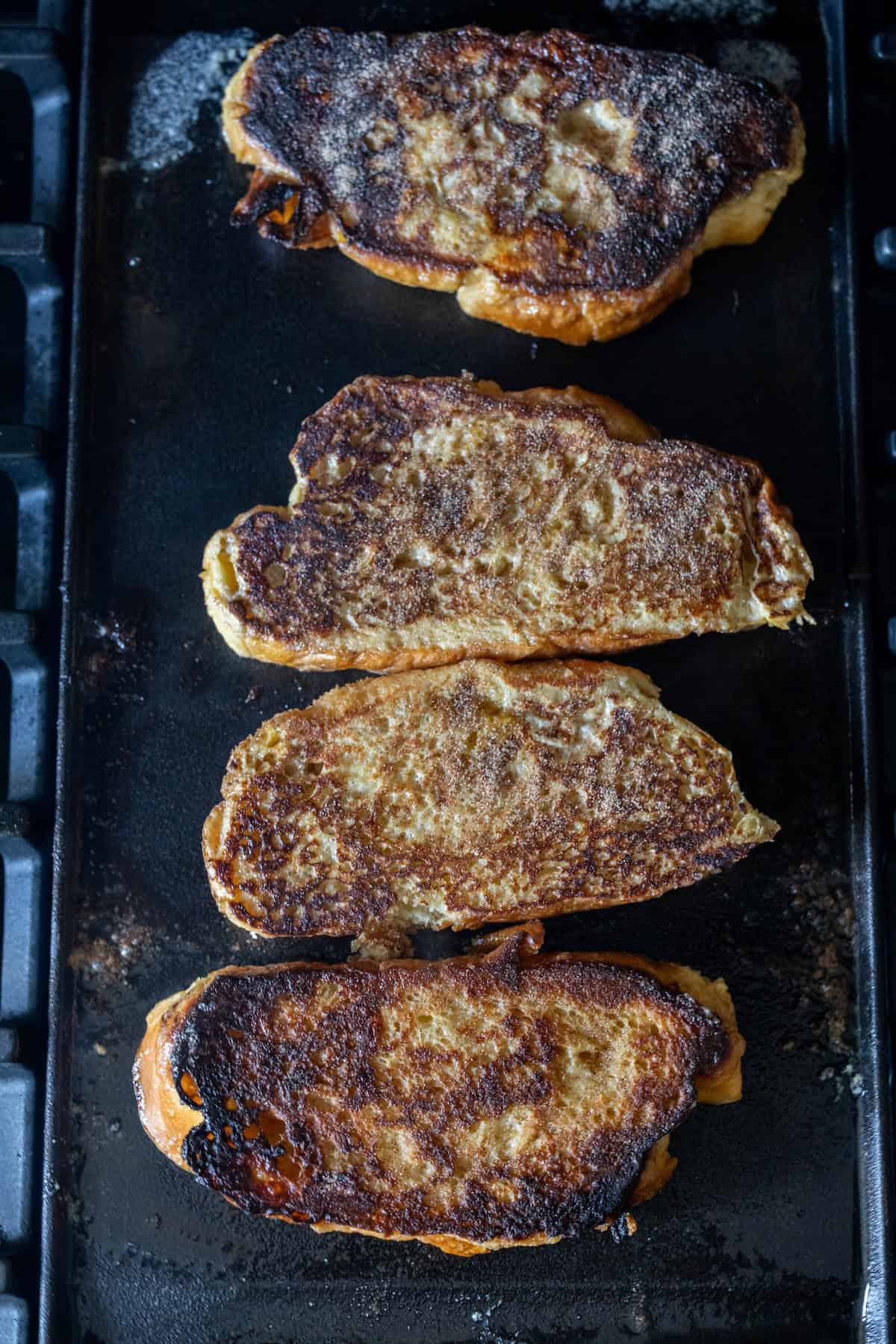
Add the Crunch
While each side is cooking, sprinkle a little extra cinnamon sugar directly onto the challah. This caramelizes right on the skillet, creating an extra-sweet, crispy crust.
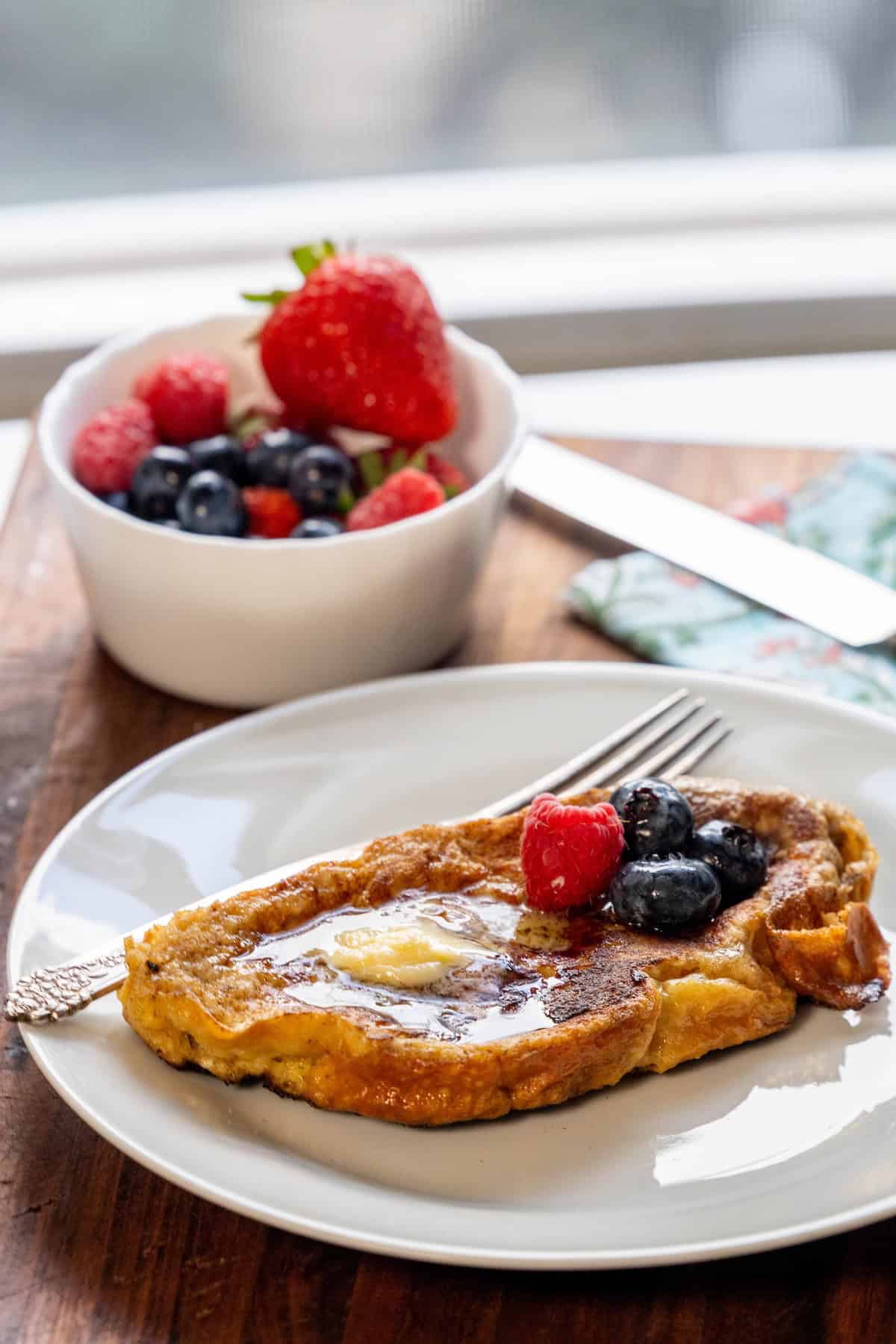
Serve Warm
Serve immediately, topped with butter and a generous drizzle of maple syrup.
Tips and Tricks for the Best Challah French Toast
- Day-old (or even two-day-old) challah works best – fresh bread is too soft and can get soggy in the custard (I like to get some
- Don’t over-soak the slices; a few seconds per side is enough for challah to absorb plenty of custard without becoming mushy
- Keep the heat at medium so the outside has time to caramelize without burning before the inside cooks through
- Sprinkling the cinnamon sugar directly on the skillet, rather than only in the batter, is what creates that signature crunchy, sweet crust
- Work in batches and keep cooked slices warm in a low oven if making a big batch for a crowd
Storage & Make-Ahead
Store leftover challah French toast in an airtight container in the fridge for up to 3 days. To reheat, warm it in a toaster oven or skillet over medium-low heat until heated through and the crust crisps back up – the microwave works in a pinch, but it will soften the crispy edges.
To freeze, let the slices cool completely, then freeze in a single layer before transferring to a freezer-safe bag for up to 2 months. Reheat frozen slices straight in the toaster or a 350-degree oven until warmed through and crisp.
You can also prep the custard mixture the night before and store it covered in the fridge, so all that’s left in the morning is dipping and griddling.
Variations to Try
- Stuffed Challah French Toast – spread a thin layer of cream cheese or mascarpone between two slices before dipping for a stuffed version
- Berry Challah French Toast – top with fresh berries and a dusting of powdered sugar alongside the maple syrup
- Bourbon Vanilla Challah French Toast – add a splash of bourbon to the custard for a deeper, warmer flavor (adults only!)
- Overnight Baked Challah French Toast – arrange dipped slices in a baking dish, refrigerate overnight, then bake at 350 degrees for 25-30 minutes for a hands-off, feed-a-crowd version
What to Serve with Challah French Toast
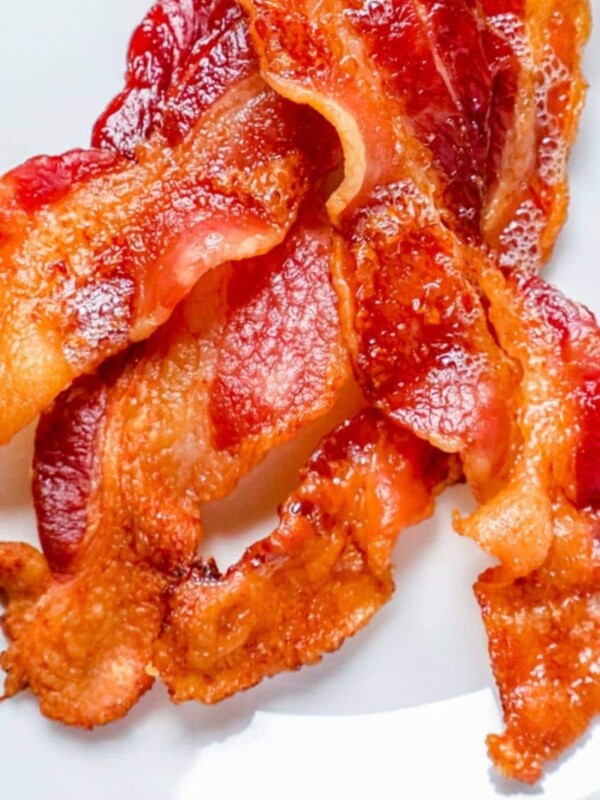
This French toast pairs perfectly with crispy bacon or breakfast sausage for a savory contrast, fresh fruit like berries or sliced bananas, or a hot cup of coffee to round out the meal. It’s also a great centerpiece for a holiday brunch spread alongside eggs and a fresh fruit salad.

Challah French Toast FAQs
Why use day-old challah instead of fresh? Day-old challah is slightly dried out, which means it soaks up the custard without falling apart or turning mushy. Fresh challah is too soft and tends to disintegrate in the batter.
Can I use fresh challah if that’s all I have? Yes, just dip it more quickly, since fresh bread absorbs custard faster and can get soggy if left to soak too long.
Why do you sprinkle cinnamon sugar on the bread as it cooks? Sprinkling cinnamon sugar directly onto the challah as it cooks caramelizes right on the surface, creating an extra-crispy, sweet crust that you don’t get from just adding cinnamon sugar to the batter alone.
Can I make this ahead for a crowd? Yes, try the overnight baked variation, or keep cooked slices warm in a 200-degree oven while you finish griddling the rest.
Can I freeze challah French toast? Yes, freeze cooled slices in a single layer, then transfer to a freezer bag for up to 2 months. Reheat in the toaster or oven for the best texture.
If you love this easy recipe please click the stars below to give it a five star rating and leave a comment! Please also help me share on Instagram, Facebook, and Pinterest!
Share on Facebook
SharePin this now to find it later
Pin ItFollow on Instagram
Challah French Toast

Ingredients
- 1 loaf day-old challah, sliced into 8 slices about 1-inch thick
- 4 large eggs
- 2 tablespoons vanilla extract
- 1 teaspoon cinnamon sugar, plus more for sprinkling
- 1 teaspoon Celtic salt
- 2 oz milk
- Butter, for the skillet
- Maple syrup and butter, for serving
Instructions
- Slice the day-old challah into 1-inch thick slices.

- Whisk together eggs, vanilla, cinnamon sugar, Celtic salt, and milk in a shallow dish.
- Dip each slice of challah in the custard, coating both sides.
- Melt butter in a skillet over medium heat. Cook the dipped challah until golden brown, about 3-4 minutes per side.
- Sprinkle a little extra cinnamon sugar onto each side while it cooks for a crispy, caramelized crust.
- Serve warm with butter and maple syrup.

Video
Nutrition
Nutrition information is automatically calculated, so should only be used as an approximation.